4.5 Rating · 1,000 Reviews Placement Assistance Online & Classroom

Artificial Intelligence Course in Chennai

  • The Artificial Intelligence Course in Chennai at Placement Point Solutions introduces learners to the foundations and practical applications of AI Classes in Chennai. The curriculum progresses from AI fundamentals and Python programming to data preprocessing, Machine Learning, Deep Learning, Natural Language Processing, Computer Vision, and Generative AI.
  • The Best Artificial Intelligence Course in Chennai is changing how businesses operate, how people interact with technology, and how organisations solve problems. From chatbots and recommendation systems to predictive intelligence, image recognition, and Generative AI, intelligent technologies are becoming increasingly important across industries.
  • Explore the Artificial Intelligence Institute in Chennai. Develop practical skills. Build your technical confidence.

Start Your Artificial Intelligence Training Course from ₹6,000 EMI*

Course Features

What Will You Learn?

  • 40+ Hours Course Duration
  • 1000+ Interview Questions & Answers
  • 100% Placement Facilitation
  • Expert Trainers
Enroll Now
Call Now
Read student reviews →

    Talk to a Consultant

    Fill in the details to get started

    Course Overview

    Artificial Intelligence Courses in Chennai Overview & Learning Objectives

    Understanding the Complete Artificial Intelligence Process

    1. Through structured lessons, coding exercises, assignments, and project-based activities, learners can develop an understanding of how AI systems are designed, trained, evaluated, and applied to real-world problems.
    2. The program is intended for college students, fresh graduates, IT and non-IT professionals, career changers, and technology enthusiasts.
    3. Previous AI development experience is not essential, but learners should be willing to practise programming and develop their mathematical and problem-solving skills.
    4. Whether you want to strengthen your technical knowledge, explore an AI-related career, or understand emerging technologies, this AI course in Chennai provides a structured starting point.

    Main Learning Objectives

    1. Learning Method

      Structured, practical training that combines concept-based instruction, demonstrations, coding exercises, assignments, and project work.

    2. Training Period

      Approximately 8–12 weeks, with more than 40 hours of course learning. Additional time should be allocated for practice, revision, and project development.

    3. Interview Preparation

      Technical interview preparation and live mock interview support are among the published course features. Learners can practise explaining programming concepts, AI terminology, algorithms, and projects.

    4. Learning Languages

      Tamil and English. Confirm the language arrangements for your preferred batch before enrolment.

    Icon for Be confident as the course expert

    Training Methods

    LMS Online Learning Platform
    (Life-time Access)

    course_period

    Course Period

    8 - 12 Weeks Training
    Free Practice Server

    Icon for New opportunites with better roles

    Interview Preparation

    Live Mock Interview
    Preparation

    language

    Course Language

    Tamil & English
    (Students Preference)

    Artificial Intelligence Course in Chennai

    Upcoming Artificial Intelligence Batches in Chennai

    01-12-2026

    New Batch Starts

    Mon-Fri

    Weekdays Regular

    08:00 AM & 10:00 AM

    (Class 1Hr - 2Hrs) / Session

    04-12-2026

    New Batch Starts

    Mon-Fri

    Weekdays Regular

    08:00 AM & 10:00 AM

    (Class 1Hr - 2Hrs) / Session

    07-12-2026

    New Batch Starts

    Mon-Fri

    Weekdays Regular

    08:00 AM & 10:00 AM

    (Class 1Hr - 2Hrs) / Session

    Can’t find a batch? Pick your own schedule

    Flexible timings available for students & working professionals.

    Request a Batch
    Fees & Duration

    Artificial Intelligence Course Fees in Chennai, Duration, Batch Timings & Training Modes

    Course duration determines how much time learners can dedicate to understanding AI concepts, exploring different technologies, and completing practical projects. Placement Point Solutions offers a structured Artificial Intelligence training program designed to provide comprehensive learning within an appropriate timeframe. However, the training schedule may vary depending on the batch and course organisation.

    Want the next batch dates and timings?

    Call +91 74181 88585
    01

    Understanding the Eight-to-Twelve-Week Schedule

    An eight-to-twelve-week program can introduce learners to several intelligence concepts through a structured weekly schedule. The actual time required to become comfortable with each technology depends on the learner's previous knowledge and independent practice. Learners who already understand spreadsheets may progress faster through introductory Excel topics. Beginners may need additional time to understand databases or programming fundamentals.

    02

    Batch Timings

    Working professionals often need training schedules that fit around their existing responsibilities.

    Learners should enquire about:

    • Morning batches.
    • Afternoon batches.
    • Evening batches.
    • Weekend availability.
    • Session duration.
    • Attendance requirements.
    • Batch commencement dates.

    The availability of specific timings must be confirmed with the institute.

    03

    Classroom Training

    Classroom training provides opportunities for direct interaction with trainers and other learners. Learners can ask questions during demonstrations and participate in guided activities.

    04

    Online Training

    Online training may provide flexibility for learners who cannot attend physical sessions. However, Learners should check whether the program includes live interaction, practical demonstrations, doubt-clearing sessions, and access to required software.

    05

    Hybrid Training

    A hybrid arrangement combines classroom and online learning. Its suitability depends on the learner's schedule and the actual facilities provided by the institute.

    06

    Free Practice Server and LMS Access

    Placement Point Solutions promotes a free practice server and lifetime LMS access. These resources may allow learners to revisit topics and continue practising after scheduled classes. Learners should confirm the exact facilities, access conditions, and technical requirements.

    07

    Planning Your Study Schedule

    Learners should allocate time for:

    • Attending sessions.
    • Revising notes.
    • Completing assignments.
    • Practising software operations.
    • Developing projects.
    • Preparing for assessments.

    A consistent routine is more useful than trying to learn every technology immediately before an examination or interview.

    Best Institute for Artificial Intelligence in Chennai – Placement Point Solutions

    ★★★★★
    4.5 (1,000 reviews)
    • Begin your career with the best Artificial Intelligence course in Chennai with us at Placement Point Solutions. Our industry-focused AI training in Chennai covers everything you need from Machine Learning, Deep Learning, NLP, Computer Vision, and Generative AI through practical projects and real-world applications. As a leading provider of Artificial Intelligence training with placement in Chennai, we offer expert-led training, hands-on learning, certification support, and dedicated placement assistance. Whether you are a student, fresher, or working professional, our AI certification course in Chennai helps you develop job-ready skills and build a successful career in the fast-growing field of Artificial Intelligence.
    ₹55,000 ₹45,000* No-Cost EMI – ₹7,500 per month

    Fees Details

    ₹45,000.00 ₹55,000.00
    Course Fees

    Artificial Intelligence Course Fees in Chennai

    • Listed course fee: ₹45,000
    • Displayed original price: ₹55,000
    • Published EMI example: ₹7,500 per month for six months

    These are the figures stated in the supplied course content, not a confirmation of current pricing. Promotional offers, payment arrangements for AI Course fees in Chennai, and EMI eligibility may change. Contact Placement Point Solutions before making a payment.

    Get the exact fee and EMI plan for you.

    Call +91 74181 88585
    01

    What to confirm before enrolment - Artificial Intelligence Course Fees in Chennai

    • Whether the displayed course fee is currently applicable.
    • Whether installment payment details about AI Course fees in Chennai are available and whether additional charges apply.
    • The schedule and duration of your selected batch.
    • Whether the training is conducted as an Artificial Intelligence online course or in a classroom.
    • What is included in the LMS, learning materials, and free practice server.
    • Which certificate is awarded and whether any external Artificial Intelligence Certification Course in Chennai has a separate fee.
    • Whether examinations, software, or optional services involve additional expenses.

    Review the complete payment conditions and course inclusions before confirming admission.

    Highlights

    Artificial Intelligence Course Highlights & Key Benefits

    The Artificial Intelligence tutorial is designed to introduce learners to the major stages of AI development, from understanding a problem and preparing data to building and evaluating models.

    Want the complete course details?

    Call +91 74181 88585
    01

    Important Course Highlights

    The Artificial Intelligence program offered by Placement Point Solutions may include:

    • Artificial Intelligence fundamentals.
    • Python programming.
    • Machine Learning concepts.
    • Deep Learning fundamentals.
    • Natural Language Processing (NLP).
    • Generative AI concepts.
    • AI tools and applications.
    • Data preparation and processing.
    • Neural networks.
    • Model development and training.
    • Hands-on practical exercises.
    • Guided assignments.
    • Project-based learning.
    • Practice resources.
    • Tamil and English instruction.
    • LMS access.
    • Career guidance and interview preparation enquiries.

    The actual availability and depth of individual modules should be confirmed using the current official syllabus.

    02

    Benefit 1: Comprehensive Artificial Intelligence Curriculum

    AI courses in Chennai provide comprehensive training in Artificial Intelligence, covering essential concepts and practical applications used in modern industries. The curriculum typically includes AI fundamentals, mathematical concepts, Python programming, data preprocessing, and Exploratory Data Analysis (EDA). Learners also gain knowledge of Machine Learning algorithms, Deep Learning architectures, Natural Language Processing (NLP), Computer Vision, Generative AI, and Reinforcement Learning. The training further explores model development, performance evaluation, and deployment techniques, helping learners understand how AI solutions are designed, developed, tested, and implemented to solve real-world problems.

    03

    Benefit 2: Python Programming and Data Handling Skills

    Python is introduced as a core programming language for AI development. Learners explore data-handling libraries and Data Analytics techniques while practising working with datasets, preparing information, identifying patterns, and analysing data to gain meaningful insights.

    04

    Machine Learning and Deep Learning Concepts

    The curriculum introduces key concepts of Machine Learning, including supervised and unsupervised learning, common algorithms, neural networks, and Deep Learning architectures. Learners explore how Machine Learning models identify patterns, make predictions, and evaluate their performance using appropriate techniques.

    05

    Benefit 4: Modern Artificial Intelligence Applications

    The program includes NLP, Computer Vision, Generative AI, and Large Language Models. These subjects help learners understand applications such as chatbots, sentiment analysis, image classification, and content generation.

    06

    Benefit 5: Hands-On AI Projects and Practical Learning

    The published course content includes coding practice, assignments, and projects involving prediction, classification, clustering, recommendation systems, and chatbot development.

    07

    Benefit 6: Learning Resources and Practice Facilities

    The published features include more than 40 hours of learning, approximately 8–12 weeks of training, lifetime LMS access, and a free practice server. Confirm the exact facilities available with your selected batch.

    08

    Benefit 7: Interview Preparation and Career Guidance

    Interview preparation, live mock interviews, and placement facilitation are listed among the program features. These services support career preparation but do not guarantee employment.

    Key Features

    Key Features of Artificial Intelligence Training in Chennai

    The quality of an Artificial Intelligence program depends on more than its advertised syllabus. Learners should examine the complete learning experience, including teaching methods, practical resources, trainer interaction, and opportunities to revise.

    See how a class works - book a free demo.

    Call +91 74181 88585
    01

    Comprehensive Technology Exposure

    A useful program should introduce learners to technologies relevant to their learning objectives. Python, Machine Learning, Deep Learning, Natural Language Processing (NLP), and Generative AI each offer different capabilities. Understanding how these technologies work together gives learners a broader understanding of Artificial Intelligence and its applications.

    02

    Practical Exercises

    Practical exercises help learners understand the difference between knowing an AI concept and applying it. Working with datasets, developing basic models, experimenting with AI tools, and evaluating results also teaches learners to identify errors and improve their technical understanding.

    03

    Bilingual Instruction

    Tamil and English teaching can make technical explanations more accessible to learners from different backgrounds. Learners should confirm the language arrangements for their selected batch.

    04

    Practice Resources

    A practice environment can provide opportunities to experiment with Python programming, machine learning models, and AI-related exercises. An LMS can help learners revisit course materials, access practice resources, and maintain continuity in their learning.

    05

    Project-Based Learning

    Projects allow learners to combine multiple AI technologies and concepts. For example, an assignment may involve preparing a dataset, developing a machine learning model using Python, training it, evaluating its performance, and understanding its practical applications.

    06

    Flexible Learning Arrangements

    Learners and working professionals may have different scheduling requirements. Available batch timings and training modes should be checked before registration.

    07

    Career Guidance

    Career guidance plays an important role in helping learners prepare for employment opportunities in the Artificial Intelligence industry. It can include understanding AI-related job roles and responsibilities, identifying relevant technical skills, preparing professional resumes, revising important concepts, and developing effective interview techniques. Learners can also receive guidance on presenting their project experience, explaining technical knowledge, and answering common interview questions. Those considering the Best Artificial Intelligence Training Institute in Chennai should evaluate the career support offered, including interview preparation, resume assistance, job opportunity updates, and placement facilitation. It is important to understand the specific services provided rather than relying solely on general placement claims.

    08

    How to Choose the Right Artificial Intelligence Training Institute?

    Compare the available Artificial Intelligence Training options carefully, ask questions about the practical learning environment, and confirm all important details before registration.

    A sensible comparison includes:

    1. Course syllabus.
    2. AI technology coverage.
    3. Trainer experience.
    4. Practical assignments.
    5. Project opportunities.
    6. Training duration.
    7. Batch availability.
    8. Learning resources.
    9. Certification information.
    10. Career guidance.

    These factors make it easier to understand whether a particular Artificial Intelligence training program suits your expectations.

    Why Us

    Why Choose Placement Point Solutions for Artificial Intelligence Training?

    Choosing the best institute for Artificial Intelligence in Chennai requires more than comparing course titles. Learners should consider the curriculum, teaching approach, practical activities, learning facilities, and career support. The supplied course information highlights the following features of the Artificial Intelligence applications in daily life programs.

    Talk to our counsellor before you decide.

    Call +91 74181 88585
    01

    Progressive learning structure

    The AI courses near me begin with fundamentals and progress towards programming, data preparation, Machine Learning, Deep Learning, and specialised applications. This structure is intended to introduce foundational concepts before more advanced subjects.

    02

    Coverage of major AI areas

    The curriculum includes Python, mathematics for AI, data preprocessing, EDA, Machine Learning, neural networks, NLP, Computer Vision, Generative AI, Reinforcement Learning, and deployment. This gives learners an introduction to several related technologies and potential areas for further study.

    03

    Exposure to common development tools

    The listed tools include Python, NumPy, Pandas, Matplotlib, Scikit-learn, TensorFlow, Keras, PyTorch, OpenCV, and Jupyter Notebook. Flask and FastAPI are also included in the deployment topics.

    04

    Practical project activities

    The supplied course content includes projects involving student performance prediction, customer segmentation, spam classification, sentiment analysis, image classification, recommendation systems, chatbots, and an end-to-end capstone. These activities are intended to connect programming and AI concepts with practical problem-solving.

    05

    Published training duration

    The course information describes approximately 8–12 weeks of training and more than 40 hours of learning. Learners should plan additional time for independent practice and assignments.

    06

    Learning facilities

    The published features include lifetime LMS access and a free practice server. Confirm the access conditions and facilities available to your batch.

    07

    Interview preparation

    Technical interview preparation and live mock interview support are listed among the course features. These can help learners practise explaining concepts and projects.

    08

    Placement facilitation

    Placement facilitation is also listed as a program feature. Ask the admissions team what support is included and whether any conditions apply. Placement assistance does not guarantee employment.

    09

    A practical way to assess the program

    Before joining, review the full syllabus, ask about the trainers, clarify the practical work involved, and confirm the current Artificial Intelligence Course fees in Chennai and Artificial Intelligence Certification Course in Chennai arrangements. You should also understand the batch schedule, training mode, and learning facilities. A suitable course should match your learning objectives and give you a clear understanding of what is taught, what you are expected to practise, and what support is actually provided.

    Eligibility

    Who Can Join This Artificial Intelligence Course? & Prerequisites

    The Artificial Intelligence course is intended for learners from different educational and professional backgrounds who want to understand AI and develop practical technical skills.

    Not sure if this course fits your background?

    Call +91 74181 88585
    01

    College students

    Students interested in technology, programming, data analysis, or future AI-related careers can use the AI courses in Chennai to build foundational knowledge. The concepts may also complement studies in computer science, mathematics, statistics, engineering, and related fields.

    02

    Fresh graduates

    Graduates who want to explore AI as a career direction can use the program to learn Python, data preparation, Machine Learning, and other key subjects. Building projects and developing programming confidence will be important alongside completing the lessons.

    03

    IT professionals

    Software developers, testers, support professionals, and other IT employees may find the AI courses in Chennai useful when exploring AI technologies or expanding their technical knowledge. Existing programming experience can help learners progress through coding exercises and model development.

    04

    Non-IT professionals

    Learners from commerce, arts, science, management, and other backgrounds can begin studying AI. They may need additional time to become comfortable with programming and mathematical concepts, but an IT degree is not the only possible starting point for learning the subject.

    05

    Working professionals

    Professionals interested in developing new technical skills or considering a career transition can explore the course. They should confirm the batch schedule and training mode before enrolling so they can plan their learning around work responsibilities.

    06

    Career changers and technology enthusiasts

    People who are curious about intelligent technologies and willing to practise programming can use the course to explore AI fundamentals and applications. A clear learning goal and consistent practice will help them make better progress.

    07

    Recommended prerequisites

    Extensive AI knowledge is not required to begin. However, the following foundations can make learning easier:

    • Basic computer knowledge: Familiarity with using a computer, managing files, and working with common applications.
    • Logical thinking: An interest in solving problems step by step.
    • Mathematical readiness: Willingness to study algebra, probability, statistics, and basic linear algebra.
    • Programming commitment: Readiness to learn Python and practise writing code.
    • Regular practice: Time for exercises, revision, assignments, and projects.
    • Curiosity: Interest in understanding how algorithms and intelligent systems work.

    Learners without programming experience should expect to spend additional time practising Python. Those with existing coding or data experience may be able to move through introductory concepts more quickly.

    The most important requirement is a willingness to learn progressively. AI Classes in Chennai combine several technical disciplines, so learners should be prepared to strengthen their foundations as they advance.

    Artificial Intelligence Course in Chennai

    About Course

    Start Your Artificial Intelligence Training Course from ₹6,000 EMI*

    What Will You Learn?

    • 40+ Hours Course Duration
    • 1000+ Interview Questions & Answers
    • 100% Placement Facilitation
    • Expert Trainers

    Artificial Intelligence Course Syllabus & Curriculum

    Introduction to Artificial Intelligence

    • What is Artificial Intelligence?
    • History and Evolution of AI
    • Applications of AI in Real World

    Mathematics for AI

    Python Programming for AI

    Data Preprocessing

    Exploratory Data Analysis (EDA)

    Machine Learning Basics

    Regression Algorithms

    Classification Algorithms

    Decision Tree & Ensemble Methods

    Support Vector Machines

    Clustering Techniques

    Model Evaluation

    Feature Engineering

    Deep Learning Introduction

    Artificial Neural Networks (ANN)

    Convolutional Neural Networks (CNN)

    Recurrent Neural Networks (RNN)

    Natural Language Processing (NLP)

    Computer Vision

    Generative AI

    Reinforcement Learning

    AI Model Deployment

    AI Ethics & Responsible AI

    AI Tools & Frameworks

    Capstone Project

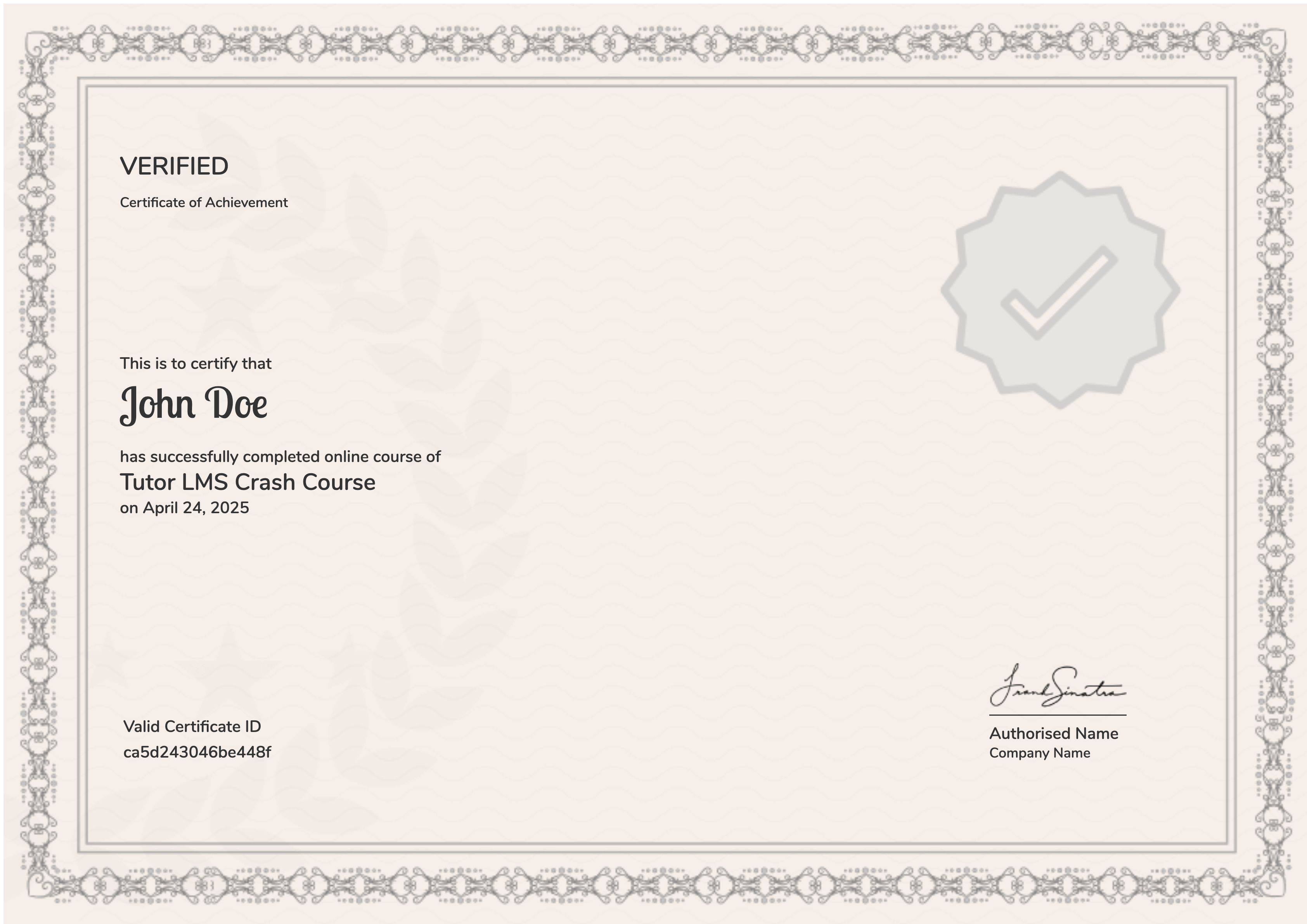
    Earn a certificate

    Add this certificate to your resume to demonstrate your skills & increase your chances of getting noticed.

    selected template

    The exact teaching sequence, depth of each topic, and practical coverage should be confirmed with Placement Point Solutions before enrolment. The module list describes the curriculum in the supplied draft; it should not be interpreted as a guarantee of mastery of every listed technology.

    How to Evaluate the Syllabus

    Before joining, ask the institute for the latest syllabus in writing. Check the number of sessions assigned to each technology, the practical exercises, the project requirements, and the assessment method. A Artificial Intelligence Certification Training in Chennai program should clearly explain the technologies included and the learning outcomes expected from participants.

    Student Ratings & Reviews

    No Review Yet
    No Review Yet

    Our Associations

    We are proudly associated with top industry partners and organizations that help our learners gain real-world exposure, placement opportunities, and career growth through quality training programs.

    futureskills prime

    Future Skills

    nasscom

    NASSCOM Futureskills

    IABAC-Logo

    IABAC

    Artificial Intelligence Course Tools & Technologies Covered

    AI Classes in Chennai teaches about development involving programming languages, data-processing libraries, Machine Learning frameworks, visualisation tools, and deployment technologies. The Best AI Courses in Chennai introduce tools associated with different stages of this workflow.

    Python

    Python is a widely used programming language in AI because of its readable syntax and extensive ecosystem. It supports data analysis, Machine Learning, Deep Learning, automation, and application development.

    NumPy

    NumPy supports numerical computing in Python. Its array operations are useful when working with numerical data and mathematical calculations.

    Pandas

    Pandas provides data structures and tools for working with tabular datasets. It is commonly used for data inspection, cleaning, filtering, and transformation.

    Matplotlib

    Matplotlib is a data visualisation library used to create charts and plots. Power BI is a business intelligence tool used to create interactive dashboards and reports. Together, these tools help learners visualise data, examine distributions and relationships, analyse trends, and present insights from datasets and model results.

    Scikit-learn

    Scikit-learn provides tools for common Machine Learning tasks, including preprocessing, classification, regression, clustering, and model evaluation.

    TensorFlow and Keras

    TensorFlow is a framework for developing Machine Learning and Deep Learning models. Keras provides a high-level interface for building and training neural networks.

    PyTorch

    PyTorch is a Deep Learning framework used to develop and experiment with neural network models.

    OpenCV

    OpenCV provides tools for image processing and Computer Vision applications, including image transformation and visual analysis.

    Jupyter Notebook

    Jupyter Notebook supports interactive coding and experimentation. It allows learners to combine code, outputs, and explanatory notes in one working environment.

    Flask and FastAPI

    Flask and FastAPI are Python frameworks that can be used to expose application functionality through web APIs. In AI development, they can help connect a trained model with another application.

    The tools introduced in a course provide a starting point. Their practical use and depth of coverage depend on the lessons, exercises, and projects included in the selected batch.

    Get the tool-wise syllabus and lab details.

    Call +91 74181 88585

    AI Training Course Projects & Practical Training

    Projects help learners connect programming, data preparation, algorithm selection, and model evaluation. The supplied course content includes practical exercises across prediction, classification, clustering, recommendation systems, NLP, Computer Vision, and chatbot development. The following project descriptions explain the learning purpose of each activity. They should be treated as project examples, not claims that every learner will build an identical production-ready system.

    01

    Project 1: Student Performance Prediction

    This project explores how data can be used to estimate student performance. Learners work with a student-related dataset, examine relevant attributes, prepare the information, and select a suitable prediction approach. Depending on the dataset and target variable, the task may be structured as a regression or classification problem.

    Key learning areas include:

    • Inspecting and cleaning student data.
    • Identifying relevant input features.
    • Preparing training and testing datasets.
    • Applying an appropriate prediction algorithm.
    • Evaluating model performance.
    • Interpreting the results and recognising limitations.

    The project introduces predictive modelling and demonstrates how data analysis can support educational insights. Predictions should not be treated as definitive judgements about individual students.

    02

    Project 2: Customer Segmentation Using K-Means

    Customer segmentation involves grouping customers according to similarities in their data. K-Means is an unsupervised learning algorithm that can be used to identify clusters. Learners examine customer attributes, prepare numerical features, apply clustering, and interpret the resulting groups.

    The project covers:

    • Understanding the dataset and selected variables.
    • Cleaning and preparing customer information.
    • Applying feature scaling where appropriate.
    • Selecting a cluster count.
    • Running K-Means.
    • Examining cluster characteristics.
    • Interpreting the results for possible business applications.

    This exercise demonstrates how unsupervised learning can reveal patterns without predefined customer labels.

    03

    Project 3: Email Spam Classification

    This project introduces text classification through the task of identifying spam and non-spam messages. Learners work with labelled email data, clean and transform text, represent messages numerically, and train a classification model.

    Key activities include:

    • Preparing and examining labelled messages.
    • Cleaning text and removing irrelevant elements.
    • Converting text into numerical features.
    • Training a classification algorithm.
    • Evaluating predictions using suitable metrics.
    • Reviewing incorrect classifications.

    The project provides an introduction to NLP and supervised Machine Learning.

    04

    Project 4: Sentiment Analysis

    Sentiment analysis examines text to identify opinions or emotional tone, often by classifying content as positive, negative, or neutral. Learners prepare text data, apply text representation techniques, and explore a model that predicts sentiment.

    The exercise can include:

    • Cleaning and tokenising text.
    • Converting text into numerical representations.
    • Training a sentiment classification model.
    • Evaluating classification results.
    • Considering ambiguous language and context.

    Possible applications include analysing product reviews, customer feedback, and social media comments. Automated sentiment predictions may not accurately interpret sarcasm, cultural context, or complex expressions.

    05

    Project 5: Image Classification

    Image classification introduces Computer Vision by teaching a model to assign images to predefined categories. Learners examine image data, prepare it for training, and explore a suitable classification model, including a CNN-based approach where covered.

    The project introduces:

    • Organising and labelling image datasets.
    • Resizing and preprocessing images.
    • Splitting data for training and evaluation.
    • Training an image classification model.
    • Examining predictions and errors.
    • Understanding the effect of image quality and dataset size.
    06

    Project 6: Recommendation System

    Recommendation systems suggest items based on information such as user preferences, item characteristics, or patterns in previous interactions. Learners explore how recommendation approaches can be used in applications such as e-commerce, entertainment, and content platforms.

    The project may introduce:

    • Understanding user and item data.
    • Identifying preference patterns.
    • Exploring similarity-based recommendations.
    • Generating recommendations from available information.
    • Evaluating the usefulness and limitations of the output.
    07

    Project 7: AI Chatbot

    A chatbot communicates with users through text or voice. Its design may use predefined rules, NLP techniques, Machine Learning, or Large Language Models. The project introduces the process of building a basic conversational application. Depending on the approach taught, learners may explore user input, text processing, response generation, and application integration.

    Important considerations include the accuracy of responses, handling unclear Artificial Intelligence questions, and recognising when a chatbot should not provide an answer.

    08

    Project 8: End-to-End AI Capstone Project

    The capstone brings together concepts from different parts of the curriculum. Learners work through a problem-solving process, from defining a task to presenting an evaluated solution.

    A typical workflow includes:

    1. Define a clear problem statement.
    2. Identify the data required.
    3. Inspect, clean, and prepare the dataset.
    4. Select an appropriate algorithm or model.
    5. Train the model using suitable data.
    6. Evaluate the results with relevant metrics.
    7. Document the process, findings, and limitations.
    8. Present the project and explain possible improvements.

    A completed project can help learners demonstrate their understanding during interviews. They should be able to explain their individual contribution, technical choices, evaluation approach, and the limitations of the solution.

    Want to see sample project work?

    Call +91 74181 88585

    Artificial Intelligence Course Training Methodology & Assessments

    Learning AI ML Course in Chennai requires a combination of conceptual understanding and practical application. Learning AI requires programming, analytical skills, and ML practice. The course methodology described in the supplied content brings together lessons, demonstrations, coding exercises, assignments, and projects.

    01

    Concept-based instruction

    Learners are introduced to each subject through explanations of its purpose, terminology, and practical applications. Foundational topics are covered before more advanced subjects so that learners can understand how the different areas of AI connect.

    02

    Programming demonstrations

    Python and AI-related tools are introduced through demonstrations. Learners can observe how code is written, how datasets are processed, and how algorithms are applied.

    03

    Hands-on practice

    Coding exercises provide opportunities to practise concepts introduced during lessons. Regular practice is particularly important for Python, data preprocessing, Machine Learning, and model evaluation.

    04

    Assignments and revision

    Assignments help learners revisit concepts and apply them independently. Revising previous topics is useful because later subjects often depend on earlier programming, mathematics, and data-handling skills.

    05

    Project-oriented learning

    The course includes practical project examples involving prediction, classification, clustering, NLP, Computer Vision, recommendation systems, and chatbots. Project work helps learners connect individual technical concepts within a larger problem-solving process.

    06

    Doubt clarification and learner support

    The training approach includes opportunities for learners to clarify doubts and strengthen their understanding. Learners should ask questions when they encounter difficulties with programming, mathematical concepts, algorithms, or project implementation.

    07

    Learning resources

    The published course features include LMS access and a free practice server. Confirm the access arrangements, available materials, and facilities applicable to your selected batch.

    08

    Independent learning

    Classroom or Artificial Intelligence online course sessions alone are not sufficient to develop practical AI skills. Learners should allocate time to practise Python, review mathematical concepts, experiment with datasets, and complete project tasks. The effectiveness of this methodology depends on regular participation and individual effort. Learners should focus on understanding why a particular technique is used rather than simply copying code or memorising definitions.

    Assessment Methods

    The exact assessment structure should be confirmed with the institute. Common methods in Artificial Intelligence training include:

    • Topic-based exercises.
    • Practical assignments.
    • Python programming tasks.
    • Data preprocessing exercises.
    • Machine learning algorithm implementations.
    • Model training and evaluation tasks.
    • AI application development assignments.
    • Mini-project presentations.
    • Technical discussions.

    How Learners Can Improve Their Performance

    Learners should maintain a regular practice schedule. Instead of studying every AI concept only once, they should revisit previous exercises and attempt similar tasks independently. For example, after learning data preprocessing, practise preparing another dataset. After implementing a machine learning algorithm, try training and evaluating it with a different dataset. The aim of Artificial Intelligence Training in Chennai should be to develop independent problem-solving ability and practical skills in building, training, and evaluating AI models.

    Artificial Intelligence Trainers & Industry Mentors

    Data Science and Artificial Intelligence training is conducted by Govindhan M. and Abi. Govindhan M. holds a B.Tech degree, while Abi holds a B.Sc. qualification along with an MCA. Both trainers have ten years of teaching experience in Data Science and Artificial Intelligence, helping learners build their understanding of the subject.

    The quality of technical instruction is an important consideration when choosing an Artificial Intelligence course. Learners need clear explanations, practical demonstrations, and guidance when working through unfamiliar concepts. The supplied course content describes a training approach that includes instruction, practical activities, project learning, and learner support. Before enrolment, prospective students should ask Placement Point Solutions about the trainers assigned to their selected batch.

    01

    What should you look for in an AI trainer?

    • Knowledge of Python programming and data-handling techniques.
    • Understanding of Artificial Intelligence and machine learning courses and model evaluation.
    • Familiarity with Deep Learning and relevant frameworks.
    • Practical experience with AI courses near me, projects, or applications.
    • Ability to explain mathematical and technical concepts clearly.
    • Willingness to guide learners through exercises and project difficulties.
    • Ability to connect technical subjects with real-world use cases.
    02

    Questions to ask before joining

    You may ask who will conduct the training, which subjects each trainer will handle, how practical sessions are organised, and what support is available outside scheduled lessons. You can also ask whether project work includes guidance on dataset preparation, algorithm selection, model evaluation, and presentation. A clear understanding of the teaching arrangements can help you decide whether the program suits your learning requirements. Trainer profiles and experience should be published only after they have been confirmed by the Best Institute for Artificial Intelligence in Chennai.

    Certification

    Artificial Intelligence Course Certification Details

    A course certificate can document your participation and completion of a training program. It may also support your professional profile when applying for internships or entry-level opportunities. The supplied course content refers to course Artificial Intelligence Certification Course in Chennai offered by Placement Point Solutions, an IABAC Authorised Training Provider (ATP), offering various Artificial Intelligence certification pathways, including Artificial Intelligence Foundation, Certified Machine Learning Associate, Certified Artificial Intelligence Expert, and Generative AI Course Specialist. Students can contact the institute for certification details and eligibility requirements. Prospective learners should confirm the exact certificate they will receive, the issuing organisation, and any conditions attached to it.

    Ask about certificates and exam details.

    Call +91 74181 88585
    01

    What to confirm about certification

    • The name of the certificate and issuing organisation.
    • Whether the certificate is awarded after completing the training or requires an additional assessment.
    • Whether project submission or an examination is necessary.
    • Whether external certification involves a separate registration or examination fee.
    • Whether the certificate is issued digitally, in print, or in both formats.
    • Whether any claimed partner-directory listing applies to the specific Artificial Intelligence Certification Course in Chennai being offered.
    02

    Why do practical skills matter alongside certification?

    A certificate can show that you completed a program, but it does not independently demonstrate professional competence. Employers may also assess programming ability, problem-solving, project experience, technical communication, and educational qualifications. Use your course projects to demonstrate what you can do. Be prepared to explain the problem you addressed, the dataset you used, the methods you selected, and how you evaluated the result. The value of certification is strongest when it is supported by genuine learning and demonstrable skills. Confirm the certificate details before enrolment rather than assuming that every external certification is automatically included in the course fee.

    Earn a certificate

    Add this certificate to your resume to demonstrate your skills & increase your chances of getting noticed.

    Placement Point Solutions Certificate

    Artificial Intelligence Placement Assistance & Interview Preparation

    Preparing for an AI-related job involves more than completing lessons. Candidates need to understand technical concepts, demonstrate practical skills, communicate their work clearly, and prepare for the requirements of individual employers. The supplied Best AI Courses in Chennai information lists interview preparation, live mock interview support, and placement facilitation among the program features.

    01

    Technical interview preparation

    AI-related interviews may cover:

    • Python fundamentals and programming logic.
    • Data structures and basic problem-solving.
    • Data cleaning and preprocessing.
    • Machine Learning concepts and algorithms.
    • Supervised and unsupervised learning.
    • Model evaluation and performance metrics.
    • Neural networks and Deep Learning fundamentals.
    • NLP, Computer Vision, and Generative AI concepts.
    • Tools and libraries used in practical projects.

    Candidates should be prepared to explain the purpose and limitations of the techniques they have used.

    02

    Project explanation

    A project discussion may be an important part of a technical interview. Practise explaining:

    1. The problem you wanted to solve.
    2. The dataset and its characteristics.
    3. The preprocessing steps you performed.
    4. The algorithm or model you selected.
    5. Why did you select that approach?
    6. How you trained and evaluated the model.
    7. The results and limitations.
    8. What you would improve with more time or data.
    03

    Mock interviews

    Mock interviews can help learners practise answering Artificial Intelligence questions, explain technical decisions, and identify topics that require further revision. Their usefulness depends on the quality of feedback and the effort learners put into improving.

    04

    Placement facilitation

    Placement facilitation is listed among the course features. Before enrolling, ask what services are provided, whether eligibility conditions apply, and how the Best Institute for Artificial Intelligence in Chennai supports applications or interview preparation. Placement assistance should not be interpreted as a guaranteed job, interview, or salary. Employment depends on factors such as qualifications, skills, experience, interview performance, and employer requirements.

    Know how our placement support works.

    Call +91 74181 88585

    Artificial Intelligence Career Opportunities – Jobs After AI Training

    Which is the best Artificial Intelligence used across industries? Discover how data insights support intelligent business decisions through our Artificial intelligenceCourse in Chennai. This includes roles related to programming, data analysis, model development, automation, and intelligent applications. The responsibilities and entry requirements vary between employers. Completing an introductory course can help learners explore these career directions, but it does not automatically qualify them for every specialist position. Many roles require additional education, experience, advanced technical knowledge, or a strong portfolio.

    AI Engineer

    AI Engineers work on developing and integrating intelligent systems into applications. Their responsibilities may include preparing data, selecting models, testing performance, and connecting AI functionality with software systems. Relevant skills can include Python, Machine Learning, data science and AI courses Chennai, model evaluation, and application integration.

    Machine Learning Engineer

    Machine Learning Engineers develop, train, and improve models that learn patterns from data. Their work may involve algorithm selection, feature preparation, model evaluation, optimisation, and deployment. Python, statistics, Machine Learning frameworks, and software development skills are relevant to this role.

    Junior Data Scientist

    Data Scientists analyse datasets, identify patterns, build predictive models, and communicate findings. Junior positions may involve data cleaning, exploratory analysis, visualisation, and supporting model development. Python, statistics, data analysis, and communication skills are useful foundations.

    Deep Learning Engineer

    Deep Learning Engineers work with neural networks and advanced model architectures. Applications may include image recognition, speech processing, and language technologies. These roles commonly require stronger knowledge of mathematics, neural networks, and frameworks such as TensorFlow or PyTorch.

    Natural Language Processing Developer

    NLP Developers build systems that process and analyse human language. Their work may involve text classification, sentiment analysis, chatbots, document processing, and language applications. Relevant subjects include text preprocessing, language modelling, Python, and Transformer architectures.

    Computer Vision Developer

    Computer Vision Developers create systems that analyse images and videos. Applications include image classification, object detection, visual inspection, and automated recognition. Knowledge of image processing, CNNs, OpenCV, and Deep Learning can support this career direction.

    Generative AI Developer

    Generative AI Developers work with systems that produce text, images, code, and other content. Depending on the role, they may use Large Language Models, prompt engineering, embeddings, APIs, model evaluation, and Retrieval-Augmented Generation. This is a developing specialisation that requires continuous learning and practical experimentation.

    Data Analyst

    Data Analysts examine information, prepare reports, identify trends, and support business decisions. Although the role is not exclusively focused on AI, skills in Python, data preparation, statistics, and visualisation can be useful.

    Other related roles

    Depending on additional qualifications and experience, learners may explore positions in data engineering, AI testing, automation, research assistance, and AI application support.

    How to prepare for an AI career

    Choose a role that matches your current skills and long-term interests. Strengthen Python and mathematical foundations, practise with datasets, complete projects, and learn to explain your work. Review Artificial Intelligence Course in Chennai with Placement descriptions to understand the qualifications and technologies employers expect. The course can provide an introduction to several AI courses Chennai. Further specialisation and practical experience are usually needed to become competitive for advanced technical positions.

    Find the right career path for your profile.

    Call +91 74181 88585

    Artificial Intelligence Salary in India

    Salary is one factor people consider when exploring an AI career. In India, the salary for AI experts can be quite impressive, depending on your technical skills and hands-on experience. If you have the right skills and expertise in AI tools and technologies, you have wide opportunities for your career growth and salary as well. The supplied source content includes a Chennai-specific salary dataset attributed to Flexiple and updated in August 2026. It reports: Median annual compensation: Approximately ₹8 lakh. Middle 50% range: Approximately ₹4.7 lakh to ₹15 lakh.

    Freshers

    ₹ 3 LPA - 6 LPA

    Starting your career in entry-level jobs like Junior AI Engineer, Machine Learning Intern, or AI Analyst, your salary usually depends upon your Python knowledge, AI skills, and the projects you have worked on.

    Career Switchers

    ₹ 5 LPA - 9 LPA

    For those who want to shift from a non-IT background, you can use the existing work experience with AI skills for better career opportunities and grow faster in the tech industry.

    Experience Professionals

    ₹ 8 LPA - 15+ LPA

    In case you are already experienced in building AI systems, automation, and working with data, you can move into senior roles and earn higher salaries as you gain more skills and expertise.

    Disclaimer: The salary ranges mentioned above are estimated based on current industry trends. Actual pay may vary depending on your skills, experience, location, company, and overall performance.

    Factors That Affect Artificial Intelligence Salaries

    Technical Skills

    Knowledge of Python, machine learning, deep learning, NLP, neural networks, and generative AI can affect job opportunities

    Practical Experience

    Employers may prefer candidates who have developed AI models, worked with real-world datasets, and implemented AI-based applications

    Certifications

    Relevant professional certifications can help demonstrate knowledge of AI technologies, machine learning frameworks, and development tools

    Job Responsibilities

    Different positions involve different levels of technical responsibility, from implementing AI features to developing, training, and deploying advanced machine learning models.

    Job Location

    Salary ranges may differ between Chennai and other technology markets.

    How Can Freshers Improve Their Career Opportunities?

    Freshers can take the following steps:

    1. Learn Artificial Intelligence fundamentals.
    2. Develop Python programming knowledge.
    3. Understand basic mathematics and statistics.
    4. Study machine learning concepts.
    5. Learn data cleaning and preprocessing.
    6. Explore deep learning fundamentals.
    7. Learn data preprocessing techniques.
    8. Understand NLP and generative AI basics.
    9. Complete practical AI projects
    10. Prepare a clear technical resume.
    11. Practice technical and AI-related interview questions

    The goal should be to build the technical knowledge needed for the desired role rather than focusing only on the salary range.

    Plan your career move with our counsellor.

    Call +91 74181 88585

    Artificial Intelligence Course – Frequently Asked Questions

    What is Artificial Intelligence? +

    Artificial Intelligence (AI) is a branch of computer science that focuses on developing systems capable of performing tasks that normally require human intelligence, such as learning, reasoning, pattern recognition, and problem-solving.
    At Placement Point Solutions, we help you understand how AI works and where it is used in real-world applications. Some common examples include chatbots, recommendation systems, virtual assistants, fraud detection, and image recognition.

    Is Artificial Intelligence difficult to learn? +

    Learning Artificial Intelligence can be challenging because it involves programming, mathematics, statistics, and algorithm development. However, you don't need to master everything at once.
    We take you through the fundamentals step by step, starting with Python programming and gradually introducing you to Machine Learning and other advanced AI concepts.

    Can I join the Best AI Courses in Chennai without programming experience? +

    Yes! You can start learning Artificial Intelligence even if you have no previous programming experience. However, Python is an important programming language for practical AI development.
    If you are new to coding, we recommend spending additional time practising Python. Our training helps you build your programming knowledge before moving on to more advanced AI topics.

    Is this course suitable for freshers? +

    Absolutely! Our Artificial Intelligence course is designed for learners who want to develop foundational knowledge and practical skills in AI.
    As a fresher, you can learn AI concepts, practise programming, and work on practical projects that help you understand how these technologies are used. You can also build a project portfolio to support your job applications.

    Can non-IT students learn Artificial Intelligence? +

    Yes! You don't need an IT background to start learning Artificial Intelligence. Students from arts, commerce, science, management, and other educational backgrounds can learn AI.
    You may need some additional practice in programming and mathematics, depending on your existing knowledge. We help you understand the fundamentals before progressing to advanced concepts.

    Can working professionals join the course? +

    Yes! Our Artificial Intelligence training is also suitable for working professionals who want to upgrade their technical skills or explore a career transition into AI.
    You can check with our admissions team for the available batch timings and training modes before enrolling.

    Which programming language is used for AI development? +

    Python is one of the most widely used programming languages for Artificial Intelligence. It offers an extensive collection of libraries and frameworks for data processing, Machine Learning, Deep Learning, and data visualisation.
    During your training with us, you will learn Python along with essential libraries such as NumPy and Pandas.

    What is the difference between AI and Machine Learning? +

    Artificial Intelligence is the broader field of computer science that focuses on developing systems capable of performing intelligent tasks.
    Machine Learning is a subset of AI that enables computers to learn patterns from data and use them to make predictions or decisions without being explicitly programmed for every task.
    You will explore these concepts as part of your Artificial Intelligence training.

    What is Deep Learning? +

    Deep Learning is a subset of Machine Learning that uses multi-layered neural networks to identify and learn complex patterns from large amounts of data.
    It plays an important role in applications such as image recognition, speech processing, and language applications. We introduce you to the fundamentals of Deep Learning and its practical applications.

    What is the duration of the Artificial Intelligence course? +

    Our Artificial Intelligence course has an approximate duration of 8–12 weeks, with more than 40 hours of learning.
    The actual schedule may vary depending on your selected batch. Contact our admissions team to confirm the available schedules and course timings.

    What is the Artificial Intelligence course fee in Chennai? +

    The listed course fee for our Best Artificial Intelligence Training in Chennai is ₹45,000, with a displayed original price of ₹55,000.
    We also provide an EMI example of ₹7,500 per month for six months. Since fees, discounts, and payment conditions may change, please contact our admissions team for the latest pricing details.

    Does the course include practical projects? +

    Yes! Practical learning is an important part of our Artificial Intelligence training. You get exposure to projects that help you understand how AI concepts work in real-world scenarios.
    • Prediction and clustering.
    • Spam classification.
    • Sentiment analysis.
    • Image classification.
    • Recommendation systems.
    • Chatbot development.
    • Capstone project.
    These projects help you apply your knowledge and gain practical experience. Please check with our team for the exact project list included in your selected batch.

    Which tools and technologies are covered in the course? +

    We introduce you to commonly used programming tools, libraries, and frameworks for Artificial Intelligence development.
    • Programming: Python.
    • Data Processing: NumPy and Pandas.
    • Data Visualisation: Matplotlib.
    • Machine Learning: Scikit-learn.
    • Deep Learning: TensorFlow, Keras, and PyTorch.
    • Computer Vision: OpenCV.
    • Development Environment: Jupyter Notebook.
    • Model Deployment: Flask and FastAPI.
    You will also learn where these tools are used in AI development. The depth of practical coverage may vary across topics.

    Do I need strong mathematical knowledge to learn AI? +

    No, you don't need to master advanced mathematics before joining our course. However, mathematics and statistics are important for understanding how Artificial Intelligence and Machine Learning algorithms work.
    We cover relevant mathematical foundations, including:
    • Algebra.
    • Probability.
    • Statistics.
    • Linear Algebra.
    • Basic Calculus.
    If you are new to these subjects, regular practice will help you build confidence as you progress through the course.

    What is Generative AI? +

    Generative AI (Gen AI) refers to Artificial Intelligence systems that can create new content, including text, images, audio, and code, based on patterns learned from training data.
    Large Language Models (LLMs) are one category of generative AI technology. They are widely used in chatbots, content generation, language applications, and virtual assistants.
    Understanding these technologies will help you explore the growing applications of modern AI.

    Does the course cover AI model deployment? +

    Yes. Our listed syllabus includes an introduction to AI model deployment and connecting trained models with applications.
    You will be introduced to frameworks such as Flask and FastAPI, which are commonly used to build applications around machine learning models.
    Please contact our team to understand the extent of practical deployment training offered in your batch.

    Does Placement Point Solutions provide certification? +

    Yes. Our course information includes certification details and IABAC-related certification information.
    Before enrolling, you can contact our admissions team to confirm the exact certificate, issuing organisation, eligibility requirements, and any additional certification charges.

    Does Placement Point Solutions provide placement assistance? +

    We include placement facilitation and career support features in our listed training offerings.
    Depending on the program arrangements, these may include:
    • Placement assistance.
    • Interview preparation.
    • Live mock interview support.
    • Guidance for technical interviews.
    We aim to help you prepare for job opportunities after completing your training. However, the Artificial Intelligence Course in Chennai with Placement assistance does not guarantee employment, as your selection will depend on your skills, qualifications, and employer requirements.

    What career opportunities are available after completing AI Training Institute in Chennai? +

    After developing your Artificial Intelligence skills, you can explore different career opportunities in the technology industry.
    • AI Engineer.
    • Machine Learning Engineer.
    • Junior Data Scientist.
    • NLP Developer.
    • Computer Vision Developer.
    • Generative AI Developer.
    • AI and Data Support Roles.
    The opportunities available to you will depend on your technical knowledge, practical experience, educational qualifications, and the requirements of individual employers.

    Are AI courses in Chennai suitable for beginners? +

    Yes! Artificial Intelligence courses in India are a good starting point if you want to explore this growing technology field. As a beginner, you can start with Python programming, understand the fundamentals of mathematics and statistics, and gradually move towards Machine Learning and Deep Learning. At Placement Point Solutions, we encourage you to focus on practical learning, build projects, and strengthen your problem-solving skills rather than relying only on theoretical knowledge.

    What is the difference between classroom and online AI Training Institute in Chennai? +

    • Classroom Training: You get face-to-face interaction with trainers, a structured learning environment, and opportunities to clarify your doubts directly.
    • Online Training: You get greater flexibility and can attend sessions remotely, depending on the available training arrangements.
    You can choose the learning mode that best suits your schedule, learning preferences, and personal commitments. Contact us to check the available training options.

    Is an AI certificate enough to get a job? +

    An Artificial Intelligence certificate can demonstrate that you have completed a training program, but it is generally not enough on its own to secure a technical job. Employers may evaluate your Python programming skills, knowledge of Machine Learning, practical projects, educational qualifications, problem-solving ability, and communication skills.
    We encourage you to build a strong project portfolio and gain hands-on experience alongside your certification.

    Can I study Artificial Intelligence while working? +

    Yes! You can learn Artificial Intelligence while continuing your current job, provided you can manage your training schedule and regular practice. Before enrolling, check our available batch timings and training modes with the admissions team. We also recommend allocating additional time outside your sessions for Python practice, assignments, and project development.

    Looking to build a career in Artificial Intelligence?
    At Placement Point Solutions, we help you take your first steps towards understanding Artificial Intelligence through structured learning, programming practice, and project-based training. Whether you are a fresher, a non-IT graduate, or a working professional, you can explore our Artificial Intelligence course and find out how it fits your learning and career goals. Reach out to our team to know more about the syllabus, fee details about AI Course fees in Chennai, batch schedules, and enrolment process.

    This AI Course in Chennai is Not for You, IF

    You are not ready to put effort and learn the skills you need to advance your career. It is designed for individuals who truly want to learn and build real AI skills.

    ✔ But this course is PERFECT if you are ready to learn, practice consistently, and build valuable skills in AI.

    Start Your Journey Today

    Ready to build a successful career? Join our Artificial Intelligence Training in Chennai with placement support.

    Enroll Now
    Artificial Intelligence Training in Chennai

    Let’s Walk You Through the Course

    This Artificial Intelligence program is designed to help you learn step-by-step through consistent practice and to help you build real job-ready skills with confidence.

    1

    Start with a Strong Foundation

    We begin with the core concepts of artificial intelligence, then move to Python, Machine Learning, Deep Learning, and other essential AI tools through simple explanations and guided lessons.

    2

    Apply Your Knowledge Through Practice

    Next up, you move into working with real datasets, building AI models, and completing hands-on projects, taking inspiration from real industry problems and business scenarios.

    3

    Step Into the AI Job Market

    Our experienced mentors are here to provide you the support you need with interview preparation, resume guidance, and project explanations in your roles with confidence.

    Top Features of Artificial Intelligence Classes in Chennai

    ✓ Expert-Led Training
    ✓ Real-Time Industry Projects
    ✓ Comprehensive Tool Training
    ✓ Placement-Focused Curriculum
    ✓ Interview Preparation Support
    ✓ Certification Assistance
    ✓ Hands-on Practical Sessions
    ✓ Beginner-friendly Learning Path
    ✓ 100% Placement Support
    ✓ Flexible Learning Options
    ✓ Lifetime Learning Access

    📘 Artificial Intelligence Interview Questions and Answers

    1. What is the AI ML Course in Chennai? +

    Artificial Intelligence is a field of computer science focused on creating systems that perform tasks such as learning, reasoning, problem-solving, and pattern recognition. Examples include chatbots, recommendation systems, and image recognition applications.

    2. What are the different types of Artificial Intelligence? +

    AI is often discussed in terms of Narrow AI, Artificial General Intelligence, and Artificial Superintelligence. Narrow AI performs specific tasks. General AI and Superintelligence describe hypothetical levels of broader or greater-than-human intelligence.

    3. What is Machine Learning? +

    Machine Learning is a subset of AI that enables computers to learn patterns from data and make predictions or decisions without requiring developers to explicitly program every rule.

    4. What are the main types of Machine Learning? +

    The main approaches are supervised learning, unsupervised learning, and reinforcement learning. They differ in how models use labelled data, discover patterns, or learn through interaction and feedback.

    5. What is supervised learning? +

    Supervised learning trains a model using labelled data. For example, an email classifier can learn from messages labelled as spam or non-spam.

    6. What is unsupervised learning? +

    Unsupervised learning identifies patterns or structures in data without predefined target labels. Clustering is a common example.

    7. What is Deep Learning? +

    Deep Learning is a subset of Machine Learning that uses multi-layered neural networks to learn complex patterns. It is used in image recognition, speech processing, and language applications.

    8. What is an Artificial Neural Network? +

    An Artificial Neural Network is a computational model made up of interconnected processing units arranged in layers. It learns patterns by adjusting its parameters during training.

    9. What is a perceptron? +

    A perceptron is a basic artificial neuron. It takes input values, applies weights, calculates a weighted sum, and uses an activation function to produce an output.

    10. What is an activation function? +

    An activation function determines a neuron's output based on its input. Examples include ReLU, sigmoid, and tanh. Activation functions help neural networks learn non-linear relationships.

    11. What is backpropagation? +

    Backpropagation calculates gradients of a neural network's loss function with respect to its parameters. These gradients are used during optimisation to update the model's weights.

    12. What is K-Means Clustering? +

    K-Means is an unsupervised learning algorithm that groups data points into a predefined number of clusters based on similarity. It aims to minimise variation within each cluster.

    13. What are the real-world applications of AI courses online? +

    Applications include healthcare image analysis, banking fraud detection, e-commerce recommendations, manufacturing maintenance, educational systems, transport optimisation, cybersecurity, and agricultural monitoring.

    14. What is overfitting? +

    Overfitting occurs when a model learns the training data too closely, including noise, and performs poorly on unseen data. Regularisation, cross-validation, data augmentation, and appropriate model selection can help reduce it.

    15. What is underfitting? +

    Underfitting occurs when a model is too simple to capture important patterns in the data. It may perform poorly on both training and testing datasets.

    16. What is Natural Language Processing? +

    Natural Language Processing is an area of AI courses online that enables computers to process, analyse, and generate human language. Applications include chatbots, translation, sentiment analysis, and text classification.

    17. What is Computer Vision? +

    Computer Vision enables computers to analyse and interpret visual information such as images and videos. Common applications include image classification, object detection, and visual inspection.

    18. What is a Convolutional Neural Network? +

    A Convolutional Neural Network is a Deep Learning architecture commonly used for visual data. Its convolution operations help identify features such as edges, textures, and more complex image patterns.

    19. What is the difference between classification and regression? +

    Classification predicts categories or labels, while regression predicts continuous numerical values. Spam detection is a classification example; house-price prediction is a regression example.

    20. What is Generative AI? +

    Generative AI refers to systems that create new content, including text, images, audio, and code, based on patterns learned from training data.

    21. What are Large Language Models? +

    Large Language Models are AI models trained on large amounts of text to process and generate human language. They are used in conversational assistants, summarisation, and content-generation applications.

    22. What is a Transformer model? +

    A Transformer is a neural network architecture that uses attention mechanisms to process relationships between elements in a sequence. Transformers are fundamental to many modern language models.

    23. What is feature engineering? +

    Feature engineering involves creating, selecting, or transforming input variables to help a Machine Learning model learn relevant patterns.

    24. What is a confusion matrix? +

    A confusion matrix summarises correct and incorrect predictions made by a classification model. It commonly includes true positives, true negatives, false positives, and false negatives.

    25. What is the difference between precision and recall? +

    Precision measures how many positive predictions are correct. Recall measures how many actual positive cases the model successfully identifies. The appropriate balance depends on the problem.

    26. What is cross-validation? +

    Cross-validation evaluates a model using different training and validation subsets. It helps estimate how well the model may perform on unseen data.

    27. Why is Python popular in AI? +

    Python has readable syntax, a large developer community, and extensive libraries for data processing, Machine Learning, Deep Learning, and visualisation.

    28. What is TensorFlow? +

    TensorFlow is an open-source framework used to develop and train Machine Learning and Deep Learning models, including neural networks.

    29. What is PyTorch? +

    PyTorch is an open-source framework used to develop neural networks and Deep Learning applications. It supports tensor operations, model development, and experimentation.

    30. What is the difference between TensorFlow and PyTorch? +

    Both are frameworks for Machine Learning and Deep Learning. They have different APIs and development workflows. The choice depends on project requirements, developer familiarity, and the surrounding ecosystem.

    Interview Prep

    How to Prepare for Technical Interviews

    Get guided interview preparation support.

    Call +91 74181 88585
    • Understand concepts instead of memorising definitions.
    • Practice explaining technical subjects in simple language.
    • Revise Python programs and the algorithms used in your projects.
    • Be prepared to discuss your dataset, model selection, and evaluation.
    • Explain what you learned from project challenges.
    • If you do not know an answer, be honest about what you understand and what you need to study further.

    Consistent practice and the ability to explain your own work are important parts of interview preparation. Use these Artificial Intelligence questions as a revision guide, and continue studying topics relevant to the positions you intend to pursue.

    Related Learning Resources – Continue Exploring the Best Artificial Intelligence Course in Chennai

    Learning AI should continue beyond scheduled training sessions. Regular practice, technical reading, experimentation, and project development can help you strengthen your understanding as technologies evolve.

    Python programming

    Continue practising variables, data types, conditions, loops, functions, data structures, file handling, and object-oriented programming. Write small programs that solve practical problems rather than limiting practice to isolated examples. Explore NumPy and Pandas to become comfortable with numerical arrays and tabular datasets. Practice inspecting data, filtering records, handling missing values, and transforming information.

    Mathematics and statistics

    Revise algebra, probability, descriptive statistics, linear algebra, and basic calculus. Practice interpreting mean, median, standard deviation, and statistical distributions. Develop an understanding of scalars, vectors, matrices, and matrix operations. Explore how gradients and optimisation contribute to model training. Focus on understanding what a calculation represents and why it is useful.

    Machine Learning

    Practise regression, classification, clustering, and model evaluation using different datasets. Study overfitting, underfitting, data leakage, feature selection, and feature scaling.

    When learning an algorithm, ask:

    • What problem does it solve?
    • What data does it require?
    • What assumptions does it make?
    • How does it produce predictions?
    • Which evaluation metrics are appropriate?
    • What are its limitations?

    These questions encourage practical understanding rather than memorisation.

    Deep Learning

    Study neural network structures, layers, activation functions, loss functions, forward propagation, backpropagation, and optimisation. Begin with simple neural networks before exploring more advanced architectures. Explore CNNs for image-related tasks and sequence-based models for sequential information. Compare model architectures and consider why a particular approach may suit one task better than another.

    Natural Language Processing

    Continue practising tokenisation, text preprocessing, vectorisation, sentiment analysis, and language modelling. Study Bag of Words, TF-IDF, and word embeddings, and explore how Transformer architectures are used in modern NLP systems. Start with small text-processing exercises before moving towards more advanced language applications.

    Generative AI

    Explore Large Language Models, prompt engineering, embeddings, model evaluation, and Retrieval-Augmented Generation. Learn to assess generated information rather than assuming every response is accurate. Consider limitations such as incorrect outputs, incomplete information, bias, privacy concerns, and the need for responsible use. Understanding the underlying concepts is more valuable than learning only how to operate a particular tool.

    Computer Vision

    Practise image preprocessing, classification, feature extraction, and object detection. Learn how images are represented as data and how CNNs identify patterns such as edges, textures, and more complex visual features. Explore image datasets and understand how visual models are trained and evaluated. Study transfer learning as an approach for adapting models to related tasks.

    Responsible AI

    Technical knowledge should be supported by an understanding of ethical development. Study privacy, algorithmic bias, fairness, transparency, explainability, security, and responsible deployment. Consider how AI Training Institute in Chennai may affect people and why human oversight is important, particularly when systems support decisions in sensitive areas.

    Project Development and Portfolio Building

    Build projects to reinforce your learning. Start with manageable datasets and gradually take on more complex problems. For each project:

    1. Define the problem.
    2. Identify the dataset and examine its characteristics.
    3. Prepare the data.
    4. Select an algorithm or model.
    5. Explain why you selected that approach.
    6. Evaluate the result using suitable methods.
    7. Document limitations and possible improvements.

    Maintain a portfolio that includes project descriptions, code, results, and explanations of your contribution. A well-documented project can help you demonstrate your skills during technical interviews.

    Get Started

    Begin Your AI Learning Journey with Placement Point Solutions

    Ready to start? Talk to our counsellor today.

    Call +91 74181 88585

    Artificial Intelligence Institute in Chennai are influencing how businesses make decisions as Artificial Intelligence and data-driven technologies transform how businesses make decisions and improve efficiency.

    Whether you are a college student, a fresher, a working professional, or someone considering a career transition, learning AI Training in Chennai can help you understand an important area of modern technology.

    Why is Placement Point Solutions a valuable provider of the Best Artificial Intelligence Course in Chennai?

    Our published program features also include project-oriented learning, LMS access, a free practice server, interview preparation, and an Artificial Intelligence Course in Chennai with Placement facilitation, with the following skills in this course.

    • AI fundamentals and mathematics.
    • Python programming.
    • Data collection, preprocessing, and analysis.
    • Machine Learning algorithms.
    • Deep Learning and neural networks.
    • Natural Language Processing.
    • Computer Vision.
    • Generative AI and Large Language Models.
    • Reinforcement Learning.
    • Model evaluation and deployment.
    • AI ethics and responsible use.

    Before enrolling, discuss the curriculum, batch schedule, training mode, current Artificial Intelligence Course fees in Chennai, certification arrangements, and available learning facilities with the admissions team. You do need the willingness to learn, the discipline to practise, and the curiosity to understand how intelligent technologies work. Take your next step towards learning an Artificial Intelligence course in Chennai. Contact Placement Point Solutions to discuss the course and find out whether the program matches your learning goals.

    Our Trusted Collaborators

    Tiger Analytics – Analytics & AI solutions
    Customer Analytics India Pvt Ltd
    Vittena Analytics Pvt. Ltd.
    iBeris Software Solutions
    Lapis Data Analytics Pvt. Ltd.
    Analytics Aura Private Limited
    AIML Data Analytics Solutions
    Wavicle Data Solutions LLC
    Crossroad Elf DSS Pvt. Ltd
    47Billion – Data analytics & AI solutions
    Mammoth Analytics
    Tibil Solutions
    Impact Analytics

    It’s Time You Take Your Career to the Next Phase!

    There is no perfect time for a “tomorrow I will do it" attitude. This is the time to advance your career with our best AI course for freshers in Chennai. With our mentorship and guidance, master the essential AI tools and skills you need to build a future you ALWAYS wanted.

    Get Free Career Guidance
    Beginner-friendly Practical training Career-focused learning
    ×

      Talk to a Consultant

      Fill in the details to get started

      Want to receive push notifications for all major on-site activities?

      ✕