
4.5 Rating · 1,000 Reviews Placement Assistance Online & Classroom

SAP MM Course in Chennai

  • Choosing the right SAP MM course in Chennai can help you develop the functional knowledge required to work in procurement, inventory management, purchasing and supply chain operations.
  • Our SAP MM Training and Placement in Chennai begins with an introduction to SAP and ERP before progressing into enterprise structures, material master data, vendor management, purchasing, inventory management and invoice verification.
  • We use real-time business scenarios to explain how organisations manage their procurement activities using SAP.
Course Features

What Will You Learn?

  • 40+ Hours Course Duration
  • 1000+ Interview Questions & Answers
  • 100% Placement Facilitation
  • Expert Trainers
Enroll Now
Call Now
Read student reviews →

    Talk to a Consultant

    Fill in the details to get started

    Course Overview

    SAP MM Courses in Chennai: Overview & Learning Objectives

    SAP MM (Materials Management) is one of the important functional modules in the SAP ERP ecosystem. The course is designed to connect theoretical knowledge with practical business applications. Rather than memorising transaction codes, learners develop an understanding of why each transaction is performed, what information it requires and how it affects subsequent business activities.

    1. Material procurement
    2. Purchasing
    3. Inventory management 
    4. Goods movements
    5. Supplier coordination
    6. Invoice verification
    7. Accurate material information 
    8. Control purchasing activities 
    9. Monitor stock availability
    10.  Coordinate transactions between departments.

    Our SAP MM course at Placement Point Solutions introduces learners to these processes through a progressive SAP MM Training and Placement in Chennai structure. We begin with SAP fundamentals and gradually explain how the Materials Management module supports everyday business operations. Learners explore the complete procurement cycle, understand how purchasing documents are created, practise inventory transactions and learn how SAP MM communicates with other modules.

    Main Learning Objectives

    The main objective of our SAP MM Training in Chennai is to help learners understand and work with the complete materials management process in an SAP environment. 

    1. We teach the fundamentals of enterprise structures, including company codes, plants, storage locations, purchasing organisations and purchasing groups. 
    2. Learners will understand how these organisational units connect and influence procurement and inventory transactions.
    3. We also cover material master data, supplier information, purchasing information records, source determination, and procurement documentation. 
    4. Through practical demonstrations, learners explore purchase requisitions, requests for quotations, purchase orders, goods receipts, goods issues, stock transfers and invoice verification. 
    5. Another important learning objective is understanding the integration between SAP MM and other functional modules, particularly SAP FI, SAP SD, SAP PP and SAP QM. 
    6. We explain how procurement transactions affect financial accounting, how inventory availability supports production and how purchasing activities connect with other organisational processes.
    7. The course further introduces SAP S/4HANA concepts, Fiori navigation, production planning analytics and integration with SAP MM, SAP SD, SAP FI and SAP QM.

    What Learners Should Be Able to Do

    By the end of the course, learners should be able to explain common SAP MM workflows, understand basic configuration concepts, execute important transactions in a practice environment and discuss business scenarios confidently during interviews.

    1. Candidates from commerce, management, engineering, supply chain management, logistics, purchasing and inventory-related backgrounds can benefit from understanding how SAP supports the operations of our SAP Material Management Training Institute in Chennai.
    2. Working professionals involved in purchasing, warehouse operations, vendor coordination, material planning or supply chain activities can strengthen their understanding of SAP-based business workflows. 
    3. Candidates who already work with ERP systems may also benefit from learning how SAP MM manages procurement documentation, stock movements, material valuation and supplier transactions. 
    4. Professionals interested in SAP functional consulting can use the SAP MM Training and Placement in Chennai as a starting point for developing the knowledge required to understand business requirements and support SAP MM processes.
    5. The course also welcomes learners without previous SAP experience because we introduce the concepts progressively. However, an interest in business operations, materials management and enterprise software will make the learning experience more meaningful.
    Icon for Be confident as the course expert

    Training Methods

    LMS Online Learning Platform
    (Life-time Access)

    course_period

    Course Period

    8 - 12 Weeks Training
    Free Practice Server

    Icon for New opportunites with better roles

    Interview Preparation

    Live Mock Interview
    Preparation

    language

    Course Language

    Tamil & English
    (Students Preference)

    SAP MM Course in Chennai

    Upcoming SAP MM Batches in Chennai

    01-12-2026

    New Batch Starts

    Mon-Fri

    Weekdays Regular

    08:00 AM & 10:00 AM

    (Class 1Hr - 2Hrs) / Session

    04-12-2026

    New Batch Starts

    Mon-Fri

    Weekdays Regular

    08:00 AM & 10:00 AM

    (Class 1Hr - 2Hrs) / Session

    07-12-2026

    New Batch Starts

    Mon-Fri

    Weekdays Regular

    08:00 AM & 10:00 AM

    (Class 1Hr - 2Hrs) / Session

    Can’t find a batch? Pick your own schedule

    Flexible timings available for students & working professionals.

    Request a Batch
    Fees & Duration

    SAP MM Course Fees in Chennai, Duration, Batch Timings & Training Modes

    The cost, duration and training format are important considerations when selecting an SAP MM training institute in Chennai. At Placement Point Solutions, the SAP MM Course fees in Chennai listing displays a course fee of ₹45,000, with a previously listed price of ₹55,000. It also mentions a no-cost EMI option of ₹7,500 per month for six months. These are prices and payment details, so learners should confirm the applicable fee, eligibility and payment conditions before enrolling.

    Want the next batch dates and timings?

    Call +91 74181 88585
    01

    Understanding the Eight-to-Twelve-Week Schedule

    Our  SAP MM Training and Placement in Chennai duration is approximately 8–12 weeks, with more than 40 hours of course instruction. These SAP MM Course fees in Chennai are structured to help participants understand the fundamental concepts before progressing to more detailed procurement, inventory and configuration topics. The actual time required to complete the syllabus and become comfortable with SAP transactions will depend on attendance, practice time and individual learning speed.

    02

    Batch Timings

    Working professionals often need training schedules that fit around their existing responsibilities.

    Learners should enquire about:

    • Morning batches.
    • Afternoon batches.
    • Evening batches.
    • Weekend availability.
    • Session duration.
    • Attendance requirements.
    • Batch commencement dates.
      The availability of specific timings must be confirmed with the institute.
    03

    Classroom Training

    Classroom training provides opportunities for direct interaction with trainers and other learners. Learners can ask questions during demonstrations and participate in guided activities.

    04

    Online Training

    Online training may provide flexibility for learners who cannot attend physical sessions. However, Learners should check whether the program includes live interaction, practical demonstrations, doubt-clearing sessions, and access to required software.

    05

    Hybrid Training

    A hybrid arrangement combines classroom and online learning. Its suitability depends on the learner's schedule and the actual facilities provided by the institute.

    06

    Free Practice Server and LMS Access

    We also provide access to an LMS online learning platform, which allows learners to revisit study materials and access learning resources beyond their scheduled training sessions. A practice server is included in the course features, allowing learners to understand SAP transactions in a system environment. 

    07

    Planning Your Study Schedule

    • Our course lists Tamil and English as available learning languages, based on student preference. Learners should contact our training team to confirm the next available batch, weekday or weekend options, daily timings and whether a particular batch is delivered online or through another approved training arrangement.
    • Before enrolling, we encourage candidates to discuss their professional commitments, SAP MM Course fees in Chennai, preferred learning language and previous SAP exposure with our team. This helps them understand the training schedule and select an arrangement that supports consistent participation and practical learning.

    Industry-Focused SAP MM Training in Chennai

    ★★★★★
    4.5 (1,000 reviews)
    • Practical SAP MM training in Chennai with real-time procurement processes, configuration, end-to-end lifecycle, and project exposure.
    ₹55,000 ₹45,000* No-Cost EMI – ₹7,500 per month

    Fees Details

    ₹45,000.00 ₹55,000.00
    Course Fees

    SAP MM Course Fees in Chennai

    SAP MM Course fees are an important consideration when selecting a training institute. However, the lowest-priced program is not necessarily the best option, and the highest-priced program does not automatically provide superior training. Learners should evaluate fees alongside course duration, syllabus coverage, practical SAP sessions, trainer support, learning resources, and career assistance.

    Get the exact fee and EMI plan for you.

    Call +91 74181 88585
    01

    What Determines SAP MM Course Fees?

    Several factors may influence the cost of an SAP MM training program.

    Course duration

    A longer program may involve additional training sessions, practical exercises, assignments, and project activities covering different SAP MM processes.

    Module coverage

    Training that covers procurement, purchasing, inventory management, material valuation, invoice verification, and other SAP MM functionalities may have a different fee structure from a program covering only introductory concepts.

    Practical training

    The availability of SAP system access, guided exercises, real-time business scenarios, and practical assignments may influence the overall course structure.

    Batch format

    Classroom, online, and hybrid SAP MM training programs may have different pricing structures depending on the delivery format and available facilities.

    Career support

    Resume assistance, interview preparation, mock interviews, and placement-related services should be examined to understand what is included in the training package.

    02

    SAP MM Course in Chennai Fees: What Should You Check?

    Before paying the course fee, request a complete fee breakdown.

    Learners should check:

    • Total course fee.
    • Registration charges.
    • Applicable taxes.
    • Instalment options.
    • Payment deadlines.
    • SAP learning material charges.
    • Certification examination charges.
    • SAP system access charges, if applicable.
    • Refund and cancellation policies.
    • Additional charges, if any.

    The exact SAP MM Course in Chennai Fees offered by Placement Point Solutions should be confirmed directly with its admissions team because the available source material does not specify an amount.

    03

    Comparing SAP MM Training Fees

    When comparing institutes, learners should consider the actual facilities included in the training package. A lower fee may exclude certain SAP MM topics, practical system access, or additional learning services. Another program may include more hands-on exercises and career support but require a longer time commitment. A meaningful comparison should examine the complete learning experience rather than the advertised price alone.

    04

    How to Make an Informed Decision

    Learners should request the current SAP MM syllabus, course duration, fee details, practical training facilities, and payment conditions before registering. The objective is to select a training program that provides comprehensive SAP MM knowledge, suitable practical exposure, and learning support within an affordable budget.

    Highlights

    SAP MM Course Highlights & Key Benefits

    Our SAP MM Training in Chennai at Placement Point Solutions focuses on developing a practical understanding of procurement, purchasing and inventory management through a structured learning experience.

    Want the complete course details?

    Call +91 74181 88585
    01

    Important Course Highlights

    The program covers more than 40 hours of training and is designed to introduce learners to important SAP MM concepts, beginning with ERP fundamentals and progressing towards real-time business processes.

    02

    Benefit 1: Complete Procure-to-Pay Exposure

    One of the key benefits is exposure to the complete procure-to-pay cycle. Learners understand how organisations identify material requirements, create purchase requisitions, select suppliers, generate purchase orders, receive goods and verify supplier invoices.

    03

    Benefit 2: End-to-End Process Understanding

    This end-to-end approach helps participants understand how individual transactions contribute to a larger business process.

    04

    Benefit 3: Practical SAP System Experience

     We also provide practical system exposure through a practice server, enabling learners to understand SAP navigation and perform relevant exercises.

    05

    Benefit 4: Continuous Learning Access

    The LMS learning platform offers continued access to course resources, supporting revision and independent learning. Another important highlight is our focus on interview preparation. 

    06

    Benefit 5: Comprehensive Interview Preparation

    Our course features mention more than 1,000 interview questions and answers, along with live mock interview preparation. These resources help learners revise functional concepts and practise explaining business scenarios in a professional manner.

    07

    Benefit 6: Advanced SAP Functional Knowledge

    The program also introduces learners to SAP S4 HANA concepts, Fiori navigation, reporting, material valuation and integration with other SAP modules, including SAP MM Module Training in Chennai. This broader understanding helps participants recognise the relationship between materials management and other enterprise functions.

    Our SAP MM Training and Placement in Chennai strengthen our learners' functional knowledge. With structured instruction, practical exercises, learning resources and career guidance, we aim to help participants build a stronger foundation for pursuing SAP MM-related opportunities.

    Key Features

    Key Features of SAP MM Course in Chennai

    SAP MM (Systems, Applications, and Products in Data Processing – Materials Management) is an important functional module within the SAP ERP environment. It helps organisations manage procurement activities, material requirements, supplier information, inventory operations, goods movements, and invoice verification. The module connects different materials management processes through integrated business transactions, allowing organisations to maintain accurate records and improve operational efficiency.

    See how a class works - book a free demo.

    Call +91 74181 88585
    01

    Procurement Management

    Procurement management is one of the primary features of SAP MM. It supports the purchasing process, starting from identifying material requirements to creating purchase orders and receiving goods from suppliers. Organisations can manage purchase requisitions, request quotations, compare supplier offers, create purchase orders, and monitor purchasing activities. This structured process helps purchasing departments coordinate material procurement and maintain proper transaction records.

    02

    Material Master Management

    SAP MM provides centralised material master management, allowing organisations to maintain essential information about different materials. The material master contains details such as material descriptions, units of measurement, purchasing information, storage conditions, valuation data, and planning parameters. Maintaining this information in a structured format helps different departments access consistent material records and reduces duplication across business operations.

    03

    Inventory Management

    Inventory management is another important feature of SAP MM. It enables organisations to monitor stock quantities, storage locations, and material availability. The module supports goods receipts, goods issues, stock transfers, and other inventory transactions. Businesses can maintain different stock categories and track material movements within their facilities. This helps organisations monitor inventory levels, reduce stock discrepancies, and manage material availability more effectively.

    04

    Supplier and Vendor Management

    SAP MM supports supplier-related information management by allowing purchasing departments to maintain relevant vendor details and purchasing information. Organisations can manage supplier records, purchasing conditions, payment-related information, and transaction histories. These details help businesses evaluate supplier relationships, coordinate purchasing activities, and maintain consistent procurement records.

    05

    Purchase Requisition and Purchase Order Management

    SAP MM provides structured functionality for managing purchase requisitions and purchase orders. A purchase requisition communicates an internal requirement for materials or services, while a purchase order formally records the purchasing agreement with a supplier. Users can maintain information such as material descriptions, quantities, prices, delivery dates, plants, and supplier details. These documents help businesses monitor purchasing requirements and follow procurement transactions.

    06

    Goods Receipt and Goods Issue

    The module supports goods receipt and goods issue transactions to record the movement of materials within an organisation. A goods receipt records materials received from suppliers or other sources, while a goods issue records materials withdrawn for production, consumption, sales-related processes, or other business requirements. SAP MM updates relevant inventory records and generates material documents to maintain transaction history.

    07

    Invoice Verification

    Invoice verification is an important feature that helps organisations validate supplier invoices against purchasing and goods receipt information. SAP MM supports the three-way matching process involving the purchase order, goods receipt, and supplier invoice. This helps identify discrepancies in quantities, prices, and other transaction details before invoices proceed through the financial accounting process.

    08

    Material Valuation and Account Determination

    SAP MM supports material valuation by maintaining the financial value of inventory. Organisations can use different valuation approaches depending on their business requirements and system configuration. Account determination connects relevant material transactions with financial accounting accounts. This integration helps businesses record the financial impact of goods movements and maintain appropriate inventory valuation records.

    09

    Special Procurement Processes

    SAP MM supports different procurement methods to accommodate specific business requirements. These include subcontracting, consignment, stock transport orders, and scheduling agreements. For example, subcontracting allows organisations to provide materials to external suppliers for processing, while consignment supports arrangements in which suppliers store materials at the organisation's premises. These capabilities help businesses manage different purchasing and material supply scenarios.

    10

    Integration with Other SAP Modules

    SAP MM integrates with several other SAP modules to support connected business operations. Its integration with SAP PP helps production departments manage material requirements and procurement planning. Integration with SAP SD supports processes involving material availability and sales-related deliveries. It also connects with SAP FI for financial accounting and SAP QM for quality-related inspection activities. This integration helps organisations coordinate information across different departments.

    11

    Material Requirements Planning (MRP)

    SAP MM supports material requirements planning through its integration with planning functionalities. MRP helps organisations determine the materials required for production or operational activities based on demand, stock availability, and planning parameters. It can generate procurement proposals, such as purchase requisitions and planned orders, depending on system configuration. This helps businesses plan material availability and reduce the possibility of production interruptions.

    12

    SAP Fiori and SAP S/4HANA Support

    In SAP S/4HANA environments, materials management processes can be accessed through modern applications and interfaces, including SAP Fiori. These applications provide role-based access to relevant business activities, such as managing purchase orders, monitoring inventory, and reviewing procurement information. The available functionality depends on the organisation's SAP S/4HANA version, implementation, and system configuration.

    13

    Reporting and Procurement Monitoring

    SAP MM provides reporting capabilities that help organisations monitor purchasing activities, inventory levels, material movements, and supplier transactions. Users can review relevant business documents and analyse procurement information to understand operational activities. These reports help purchasing and inventory management teams identify material requirements, monitor stock availability, and make informed decisions.

    14

    Support for Business-Specific Material Management

    SAP MM accommodates different material management requirements across industries, including manufacturing, retail, healthcare, construction, and logistics. Businesses can configure organisational structures, purchasing processes, inventory settings, and material-related parameters according to their operational requirements. This flexibility allows organisations to use SAP MM for managing different types of materials, suppliers, procurement activities, and inventory operations.

    Why Us

    Why Choose Placement Point Solutions for SAP MM Training Institute in Chennai?

    Selecting an SAP MM training in Chennai is an important step for candidates who want to develop practical ERP knowledge. At Placement Point Solutions, we focus on structured learning that connects SAP concepts with the business processes used by organisations. Our training is designed to help our learners understand not only how to perform transactions but also why those transactions are required in a business environment.

    Talk to our counsellor before you decide.

    Call +91 74181 88585
    01

    Coverage of Multiple Technologies

    We introduce our SAP Material Management Training Institute in Chennai through a progressive curriculum, beginning with ERP fundamentals and system navigation before moving into procurement, material master data, purchasing, inventory management and invoice verification. This approach helps beginners develop a foundation before studying more advanced topics.


    02

    Practical Learning Approach

    For example, instead of explaining purchase orders only as a theoretical document, we discuss how purchasing teams create them, what information they contain and how they are used during goods receipt and invoice verification.

    03

    Tamil and English Training

    The course information mentions Tamil and English learning preferences, allowing participants to discuss their preferred language with our team. Our objective is to provide a learning environment in which beginners and working professionals can understand SAP MM systematically, gain practical exposure and prepare for relevant career opportunities.

    04

    Learning Resources

    • Placement Point Solutions is the Best SAP MM Training Institute in Chennai that covers the essential functional areas required to understand materials management in an SAP environment. 
    • Learners begin by exploring the fundamentals of SAP ERP, enterprise software architecture and the purpose of individual SAP modules with SAP MM Module Training in Chennai. 
    • We then introduce the Materials Management module and explain its responsibilities within the organisation.
    • The enterprise structure section teaches participants how company codes, plants, storage locations, purchasing organisations and purchasing groups are organised.
    • These concepts are important because SAP uses organisational assignments to determine how purchasing and inventory transactions are processed. 
    • We also teach material master data and supplier-related information. Learners understand the purpose of material descriptions, material types, units of measure, purchasing views, accounting views and other relevant data fields. 
    • They explore how supplier information and purchasing records support procurement activities.
    • The purchasing section covers the complete procurement process, including purchase requisitions, requests for quotations, quotation comparison, purchase orders and purchasing document management. 
    • Learners also study source determination, pricing conditions, release strategies and special procurement processes.
    •  Inventory management is another major part of our syllabus. Participants learn how goods receipts, goods issues, transfer postings and stock transfers affect inventory quantities. 
    05

    Career Preparation

    Our Best SAP MM Training in Chennai also introduces invoice verification, account determination, material requirements planning and SAP reporting. Learners explore how SAP MM integrates with SAP FI, SAP SD, SAP PP and other functional areas. In addition to functional topics, we introduce basic configuration concepts, real-time business scenarios and project-oriented exercises. These lessons help learners understand the activities involved in implementing, maintaining and supporting SAP MM processes.

    The course also includes interview preparation, resume guidance and career-oriented discussions to help participants understand the expectations associated with SAP MM-related roles.

    06

    How to Evaluate the Institute

    Before enrolling, compare the institute's current syllabus, fees, batch schedules, trainer experience, facilities, and placement-support terms. The best SAP MM training institute in Chennai should be evaluated through evidence rather than advertisements alone. A good decision comes from understanding what the course provides and whether those facilities match your learning requirements.

    Eligibility

    Who Can Join This SAP MM Training in Chennai? & Prerequisites

    Our SAP MM course in Chennai is designed for learners from different educational and professional backgrounds. Candidates who want to understand enterprise procurement, purchasing, inventory control and supply chain management can consider joining this program. We introduce SAP concepts from the beginning, so previous experience with SAP is not compulsory.

    Not sure if this course fits your background?

    Call +91 74181 88585
    01

    College Learners

    Fresh graduates with degrees in B.Com, BBA, B.Sc, BCA, BE, B.Tech, MBA and other related disciplines can benefit from the training. Commerce and management graduates may find the purchasing, vendor management and financial integration topics particularly useful. Engineering graduates can explore the relationship between material planning, procurement and manufacturing operations.

    02

    Working professionals

    Working professionals in purchasing, logistics, warehouse management, inventory control, supply chain operations and administration can also join. Their existing industry knowledge may help them understand SAP transactions more quickly because many of the business processes discussed in the course are already familiar to them. 

    03

    Business Owners and Entrepreneurs

    Candidates who have previously worked with ERP applications or other business management systems can use this training to understand SAP-specific workflows. Professionals interested in becoming SAP MM functional consultants can also use the program as an introduction to functional consulting concepts.

    Prerequisites

    • The basic prerequisites are an interest in enterprise software, willingness to learn business processes and regular participation in practical exercises. 
    • Basic computer knowledge is helpful, but advanced programming skills are not required. 
    • SAP MM is primarily a functional module, and the course focuses on business processes, system navigation, configuration concepts and transaction execution.
    • We recommend that learners maintain a regular practice schedule and revise each topic after completing a session.
    SAP MM Course in Chennai

    What Will You Learn?

    • 40+ Hours Course Duration
    • 1000+ Interview Questions & Answers
    • 100% Placement Facilitation
    • Expert Trainers

    SAP MM Course Syllabus & Curriculum

    Introduction to SAP and ERP

    • Meaning and purpose of Enterprise Resource Planning.
    • Introduction to SAP and its business applications
    • Overview of SAP ERP architecture
    • SAP ECC and SAP S/4HANA differences
    • Introduction to SAP functional and technical modules.
    • Role of SAP MM in enterprise operations.
    • Business processes supported by Materials Management
    • Introduction to the procure-to-pay lifecycle.

    SAP MM Overview

    SAP System Navigation

    Enterprise Structure in SAP MM

    Master Data Management

    Material Master – Basic Data

    Material Master – Purchasing and MRP Views

    Supplier and Business Partner Master Data

    Purchasing Fundamentals

    Purchase Requisition

    Request for Quotation and Quotation Comparison

    Purchase Order Processing

    Pricing Procedure in SAP MM

    Inventory Management

    Goods Receipt Processing

    Goods Issue and Transfer Posting

    Stock Transfer and Stock Transport Orders

    Physical Inventory

    Special Procurement Processes

    Source Determination

    Release Strategy and Purchasing Approvals

    Material Requirements Planning

    Valuation and Account Determination

    Invoice Verification

    Batch Management and Split Valuation

    SAP S/4HANA MM and Fiori

    Automatic Purchase Orders and Agreements

    Reporting in SAP MM

    Integration with SAP FI

    Integration with SAP SD

    Integration with SAP PP and SAP QM

    Basic SAP MM Configuration

    Real-Time Project and Business Scenarios

    Interview Preparation and Career Guidance
    This module provides a clear career roadmap, industry expectations, job search strategies, and placement assistance support until employment.

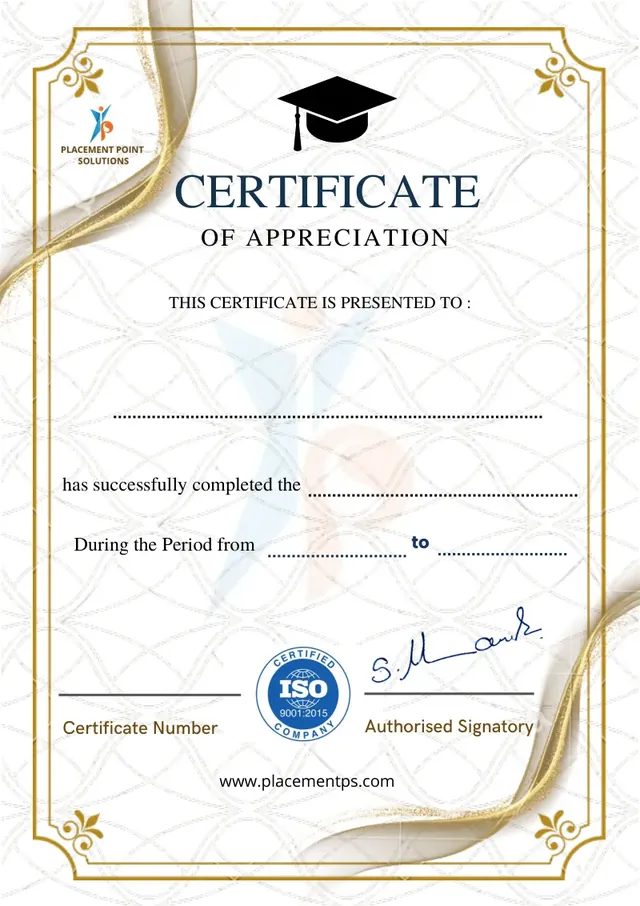
    Earn a certificate

    Add this certificate to your resume to demonstrate your skills & increase your chances of getting noticed.
    selected template

    How to Evaluate the Syllabus

    Before joining, ask the institute for the latest syllabus in writing. Check the number of sessions assigned to each technology, the practical exercises, the project requirements, and the assessment method. A SAP MM Certification Training in Chennai program should clearly explain the technologies included and the learning outcomes expected from participants.

    Student Ratings & Reviews

    No Review Yet

    No Review Yet

    Our Associations

    We are proudly associated with top industry partners and organizations that help our learners gain real-world exposure, placement opportunities, and career growth through quality training programs.

    futureskills prime

    Future Skills

    nasscom

    NASSCOM Futureskills

    IABAC-Logo

    IABAC

    SAP MM Training Tools & Technologies Covered

    Our SAP MM Training in Chennai introduces learners to the software environments, interfaces and functional technologies used in enterprise Materials Management. We explain the purpose of each tool and demonstrate how it supports procurement, inventory management, material planning and business reporting.

    SAP S/4HANA

     Introduction to SAP's next-generation ERP platform and its modern data and business-process architecture.

    SAP GUI

    Learning the graphical interface used to access SAP transactions, screens and system functions.

    MIGO

    Understanding goods movements and material document processing.

    ME21N

    Exploring purchase order creation.

    MM01

    Learning material master creation.

    Get the tool-wise syllabus and lab details.

    Call +91 74181 88585

    SAP MM Training Course Projects & Practical Training

    Practical Best SAP MM Training in Chennai is an important part of understanding SAP material management module training because the module involves interconnected business transactions.

    At Placement Point Solutions, we focus on helping learners understand how individual activities fit into a complete procurement and inventory management process.

    We use practical examples to explain how a business identifies material requirements, selects suppliers, creates purchasing documents, receives goods and verifies invoices. This approach helps learners connect SAP transactions with real organisational activities.

    Why Are Projects Important?

    Practical projects play an important role in SAP MM training because they help learners understand how materials management processes work in real business environments. At Placement Point Solutions, learners are introduced to practical exercises and project-based scenarios covering procurement, inventory management, supplier information, and invoice verification. These activities help participants connect theoretical concepts with SAP system operations.

    01

    Project 1 : Material Master and Supplier Master Creation Project

    Learners work on a project involving material master creation, supplier information maintenance, and organisational structure assignments. They practise maintaining essential material details, supplier records, and purchasing information. This project helps them understand how accurate master data supports procurement and inventory transactions.

    02

    Project 2 : Procurement Cycle Management Project

    This project focuses on the complete purchasing process, starting with purchase requisition creation and continuing through requests for quotations (RFQs), quotation comparison, and purchase order creation. Learners explore how purchasing documents are maintained, how suppliers are evaluated, and how procurement activities progress through different stages.

    03

    Project 3 : Inventory Management and Stock Transfer Project

    Learners practise inventory-related transactions, including goods receipts, goods issues, stock transfers, and transfer postings. They understand how movement types influence stock quantities and how material documents record inventory transactions. The project also introduces physical inventory activities and stock discrepancy investigation.

    04

    Project 4 : Invoice Verification Project

    This project introduces the invoice verification process by comparing purchase orders, goods receipts, and supplier invoices. Learners explore common discrepancies, including price and quantity differences, and understand how organisations investigate and resolve these issues before processing supplier invoices.

    05

    Project 5 : Special Procurement Processes Project

    Learners explore different procurement scenarios, including subcontracting, consignment, and stock transport orders. These practical exercises demonstrate how organisations manage materials under different purchasing arrangements and operational requirements.

    06

    Project 6 : End-to-End SAP MM Implementation Scenario

    Towards the end of the training program, learners work through an integrated business scenario connecting procurement, inventory management, and financial accounting activities. They follow the flow of business documents from material requirements and purchasing to goods receipt and invoice verification. This project helps learners understand the relationship between different SAP MM processes and explain their practical knowledge during technical interviews.

    The exact SAP MM projects and practical exercises depend on the available SAP training environment and course schedule.

    Want to see sample project work?

    Call +91 74181 88585

    SAP MM Training Methodology at Placement Point Solutions

    Our Best SAP MM Training Institute in Chennai follows a structured learning approach that combines concept explanations, instructor-led demonstrations, practical exercises, revision, and assessments. The methodology is designed to help learners understand SAP MM concepts and apply them to business scenarios.

    01

    Concept Explanation and Business Process Understanding

    We begin each major topic by explaining its business purpose. This helps learners understand why organisations require a particular materials management process before learning how to execute it in SAP. For example, before introducing purchase order creation, we explain how procurement departments receive material requirements, evaluate suppliers, and formalise purchasing decisions.

    02

    Instructor-Led SAP Demonstrations

    Once learners understand the business process, we introduce the relevant SAP documents and their important fields. Our trainers demonstrate system navigation and transaction execution, explaining the required screens, document fields, transaction codes, and system messages. These demonstrations help participants understand how different SAP MM transactions work.

    03

    Hands-On Practical Training

    After instructor-led demonstrations, learners practise the concepts using the available SAP training environment. They perform relevant transactions and become familiar with the steps involved in procurement, inventory management, goods movements, and invoice verification. This practical approach helps reinforce their understanding of SAP MM functionalities.

    04

    Scenario-Based Learning

    Our teaching methodology also includes scenario-based discussions that connect SAP MM concepts with business situations. For example, we discuss what happens when a supplier delivers fewer materials than ordered, how an incorrect goods receipt can be reversed, and why an invoice may be blocked during verification. These discussions encourage learners to develop functional reasoning instead of relying entirely on memorised transaction steps.

    05

    Revision and Doubt-Clearing Sessions

    Revision is another important part of our training methodology. We encourage participants to revisit completed topics, practise previously covered transactions, and clarify their doubts before progressing to advanced subjects. Regular revision helps learners strengthen their understanding and improve their confidence when working with SAP MM processes.

    06

    Assessments and Practical Evaluations

    Assessments help trainers understand how effectively learners have grasped the concepts covered during training. Depending on the training plan, evaluations may include topic-based questions, practical exercises, business scenario discussions, and interview-oriented revision. These activities help identify areas that require additional practice.

    07

    Mock Interview Preparation

    We also introduce mock interview preparation to help learners communicate their SAP MM knowledge clearly and confidently. Participants practise explaining materials management processes, identifying business problems, and discussing appropriate functional solutions. This preparation helps them become more comfortable answering technical and scenario-based questions during SAP MM interviews.

    SAP MM Trainers & Industry Mentors

    The SAP MM training programme at Placement Point Solutions is handled by Govindhan and Janani. Govindhan holds a Bachelor of Engineering (BE) degree in Electronics and Communication Engineering (ECE), while Janani holds a Master of Science (M.Sc.) degree. Both trainers have three years of teaching experience in SAP MM, bringing their academic knowledge and subject expertise into the training sessions.

    01

    Importance of Trainer Experience

    At Placement Point Solutions, we focus on delivering SAP Material Management module training through practical explanations, structured lessons and industry-oriented examples. 

    02

    What Should Learners Look For?

    1. Trainer qualifications.
    2. Relevant technical experience.
    3. Technologies taught.
    4. Previous teaching experience.
    5. Practical demonstrations.
    6. Project guidance.
    7. Doubt-clearing arrangements.
    8. Individual feedback.
    03

    Industry-Relevant Teaching

    Our trainers guide learners through procurement, purchasing, inventory management, material master data and invoice verification while explaining how these processes operate within an SAP environment. 

    04

    Mentoring and Doubt Resolution

    • We encourage participants to ask questions, practise transactions and understand the business purpose behind every activity. 
    • We also introduce real-time scenarios to help learners connect functional concepts with organisational requirements. 
    • Throughout the program, we support learners with topic clarification, practical guidance, revision activities and interview preparation. 
    • Our objective is to help every participant develop confidence in understanding and discussing SAP material management module training processes.
    05

    Questions to Ask Before Enrolment

    Ask whether the same trainer will handle the entire batch, whether additional sessions are available, and how doubts are resolved. If the institute advertises industry mentors, clarify whether mentoring involves classroom teaching, individual discussions, guest sessions, or project reviews. These details help learners evaluate the actual value of the training.

    Certification

    SAP MM Course Certification Details

    SAP MM Certification in Chennai is an important consideration for candidates who want to demonstrate their knowledge of SAP Materials Management. Our program introduces learners to the essential functional areas of Materials Management, including procurement, purchasing, inventory management, material master data, supplier management and invoice verification.

    At Placement Point Solutions, learners can receive a course completion certificate after completing the training requirements. Completing these topics and participating in the required learning activities can help candidates document their training experience when preparing their resumes.

    Ask about certificates and exam details.

    Call +91 74181 88585
    01

    What Is a Course Completion Certificate?

    The certificate is intended to demonstrate that the participant has undergone training covering the relevant SAP Materials Management concepts and learning activities. It is important to understand the difference between an institute-issued course completion certificate and an official SAP MM Certification in Chennai.

    02

    Why Is Certification Useful?

    An institute certificate confirms participation in or completion of the training program. An official SAP certification is a separate credential awarded through SAP's authorised certification process, subject to the applicable examination requirements.

    03

    What Should Learners Verify?

    Our training is designed to help learners establish a functional foundation and understand the topics relevant to SAP MM Course in Chennai-related careers. 

    Candidates who want to pursue an official SAP credential should check the latest SAP MM Certification in Chennai catalogue, examination format, eligibility conditions and assessment requirements through the official SAP.

    We encourage learners to retain their course completion certificate, practical project information and learning records as part of their professional documentation. 

    Together, these can help communicate their training background to potential employers.

    04

    Certification and Career Development

    Certification should be treated as one component of professional development. A strong candidate should combine relevant training, practical projects, technical knowledge, and clear communication.

    Earn a certificate

    Add this certificate to your resume to demonstrate your skills & increase your chances of getting noticed.

    Placement Point Solutions Certificate

    SAP MM Placement Assistance & Interview Preparation

    Preparing for employment requires more than completing a training program. Candidates must be able to communicate their knowledge, explain business processes and demonstrate an understanding of how SAP supports organisational activities. At Placement Point Solutions, we include interview preparation and career guidance as part of our SAP material management training approach.

    01

    Resume Preparation

    Resume preparation is another important aspect of career development. Candidates should present their educational qualifications, relevant industry experience, SAP MM Course in Chennai training, practical exercises and project exposure accurately. 

    1. We encourage learners to describe their actual training activities without claiming professional implementation experience they have not gained. 
    2. Mock interviews can help participants improve their confidence, communication and technical accuracy. 
    3. We also discuss how to approach job descriptions, identify relevant skills and prepare for entry-level or experienced SAP-related positions.
    4. Our placement facilitation is intended to support learners during their job search. However, actual recruitment depends on employer requirements, candidate qualifications, interview performance, experience and the availability of suitable vacancies. 
    5. We encourage every participant to continue practising and developing their knowledge alongside the training.
    02

    SAP MM Technical Interview Preparation

    Candidates should revise the fundamental concepts and practical functionalities of SAP MM before attending technical interviews. They should understand how different materials management processes work and be able to explain relevant SAP transactions, business scenarios, and document flows.

    Important areas include:

    Material Master and Supplier Master

    • Material master creation and maintenance.
    • Supplier master information.
    • Material types and material groups.
    • Units of measurement.
    • Purchasing and accounting views.
    • Organisational structure assignments.

    Procurement Management

    • Purchase requisitions.
    • Requests for quotations (RFQs).
    • Quotation comparison.
    • Purchase order creation.
    • Source determination.
    • Purchasing information records.
    • Release strategies.

    Inventory Management

    • Goods receipt.
    • Goods issue.
    • Stock transfers.
    • Transfer postings.
    • Movement types.
    • Physical inventory.
    • Stock discrepancy management.

    Invoice Verification

    • Logistics invoice verification.
    • Three-way matching.
    • Purchase order and goods receipt comparison.
    • Invoice blocking.
    • Price differences.
    • Quantity discrepancies.

    Special Procurement Processes

    • Subcontracting.
    • Consignment.
    • Stock transport orders.
    • Scheduling agreements.
    • External procurement.

    SAP MM Integration

    • Integration with SAP FI.
    • Integration with SAP PP.
    • Integration with SAP SD.
    • Integration with SAP QM.
    • Material valuation and account determination.
    03

    Project-Based Interview Questions

    Interviewers may ask candidates to explain their practical SAP MM projects and business scenarios.

    Common questions include:

    1. What was the objective of your SAP MM project?
    2. How did you create and maintain a material master record?
    3. What is the difference between a purchase requisition and a purchase order?
    4. How does the procurement cycle work in SAP MM?
    5. What happens when a goods receipt is posted?
    6. What are movement types, and why are they important?
    7. How does invoice verification work?
    8. What is the difference between subcontracting and consignment?
    9. How does SAP MM integrate with SAP FI?
    10. How would you investigate a stock discrepancy?

    Candidates should answer these questions using their actual training exercises and project experience. Explaining the business requirement, SAP process, documents involved, and outcome can help demonstrate functional understanding.

    04

    Communication Skills

    SAP MM professionals frequently communicate with purchasing departments, inventory management teams, suppliers, finance personnel, and other business stakeholders. They should be able to explain procurement processes, material movements, and transaction-related issues without relying on unnecessarily complicated terminology.

    For example, instead of simply stating that a goods receipt updates inventory, a candidate should explain how the received quantity is recorded against a purchase order, how the stock balance changes, and how the transaction may generate corresponding accounting entries.

    05

    Placement Expectations

    Learners interested in SAP MM Courses in Chennai with Placement should confirm the placement assistance provided by the training institute. They should understand the number of placement opportunities, eligibility requirements, employer connections, interview preparation facilities, and duration of career support. No training institute should be assumed to guarantee employment unless the relevant terms and conditions are clearly documented.

    Know how our placement support works.

    Call +91 74181 88585

    SALARY INSIGHTS

    SAP MM Salary Insights (India). SAP MM offers strong career growth with salaries increasing based on functional knowledge, hands-on project experience, and real-time implementation expertise.

    Freshers

    ₹2.5 LPA – ₹5 LPA

    Freshers with foundational SAP MM knowledge may explore entry-level opportunities in procurement, purchasing, inventory management, SAP end-user operations, and junior support roles. Candidates with practical training and project exposure may be better prepared to explain SAP MM transactions and demonstrate their understanding of business processes during interviews.

    Career Switchers

    ₹4 LPA – ₹8 LPA

    Career switchers with previous experience in procurement, purchasing, inventory management, warehouse operations, finance, or supply chain management may be able to connect their existing industry knowledge with SAP MM

    Skilled Experts

    ₹8 LPA – ₹15+ LPA

    Professionals with strong practical experience, functional knowledge, and SAP implementation exposure may explore more advanced SAP MM-related positions.

    Disclaimer: Salary figures are indicative estimates based on market trends and may vary depending on skills, experience, location, company policies, and individual performance.

    SAP MM Salary in Chennai

    Salary is an important consideration for learners exploring SAP MM as a career. However, there is no single salary applicable to every professional completing SAP MM training in Chennai. Compensation varies according to work experience, SAP version knowledge, technical proficiency, functional expertise, implementation exposure, company requirements, and interview performance.

    Technical Skills

    Knowledge of SAP MM functionalities, procurement processes, inventory management, material valuation, and SAP integration can influence job opportunities

    Practical Experience

    Employers may prefer candidates who have worked with SAP transactions, handled business scenarios, and participated in implementation or support activities.

    Certifications

    Relevant SAP certifications can help demonstrate knowledge of SAP materials management and enterprise resource planning.

    Job Responsibilities

    Different positions involve different responsibilities, ranging from processing purchasing transactions to configuring SAP systems and supporting implementations.

    Location

    Salary ranges may differ between Chennai and other technology and business markets.

    How Can Freshers Improve Their Career Opportunities?

    Freshers can take the following steps:

    1. Learn SAP MM fundamentals.
    2. Understand material master and supplier master management.
    3. Practise purchase requisition and purchase order creation.
    4. Learn inventory management and goods movements.
    5. Understand invoice verification.
    6. Study SAP MM integration with other modules.

    Plan your career move with our counsellor.

    Call +91 74181 88585

    SAP MM Course - Frequently Asked Questions

    How does Placement Point Solutions teach SAP MM to beginners? +

    At Placement Point Solutions, we begin our SAP MM training with an introduction to ERP, SAP architecture and the role of Materials Management in business operations. We also include practical exercises to help learners understand how transactions work in an SAP environment. Our objective is to make the learning process structured and accessible.

    Does Placement Point Solutions provide practical SAP MM training? +

    Yes. Practical learning is an important part of our SAP MM program. We introduce learners to relevant transactions and demonstrate how procurement and inventory activities are performed in the SAP system. Our course information also mentions access to a free practice server, subject to the training arrangements.

    How long does Placement Point Solutions take to complete the SAP MM Training in Chennai? +

    Our SAP MM course information mentions a training period of approximately 8–12 weeks and more than 40 hours of instruction. The time required to become comfortable with the subject also depends on the learner's attendance and independent practice.

    What topics does Placement Point Solutions cover in SAP MM training? +

    We cover the major functional areas of SAP Materials Management. Our syllabus includes SAP and ERP fundamentals, organisational structures, material master data, supplier information, purchasing, purchase requisitions, RFQs, purchase orders, pricing procedures, inventory management, goods movements and invoice verification. We also introduce material requirements planning, source determination, release strategies, valuation, account determination and special procurement processes. Our training further discusses SAP MM integration with FI, SD, PP and QM, along with SAP S/4HANA concepts.

    Can freshers join the SAP MM course at Placement Point Solutions? +

    Yes. Our SAP MM program is designed to introduce the subject from the fundamentals, making it suitable for freshers interested in enterprise software and supply chain operations. We explain the purpose of each business process before introducing the corresponding SAP transactions. Fresh graduates can learn how organisations purchase materials, manage suppliers, maintain stock and verify invoices. We also introduce interview preparation and career guidance to help freshers understand the skills expected in relevant entry-level positions.

    Do I need programming knowledge to learn SAP MM at Placement Point Solutions? +

    No. Advanced programming knowledge is not a prerequisite for learning SAP MM. Our course focuses primarily on functional business processes such as purchasing, procurement, inventory management, material valuation and supplier invoice verification. For our MM training, an interest in business processes and regular system practice are more important.

    Does Placement Point Solutions teach SAP S/4HANA MM? +

    Yes. Our SAP MM learning content introduces SAP S/4HANA-related concepts. We discuss the differences between traditional SAP ECC environments and SAP S/4HANA, including changes to the user experience and master data approach. The exact system version available for practical exercises should be confirmed with our training team.

    Which language is used to teach SAP MM at Placement Point Solutions? +

    Our course information mentions Tamil and English as available learning languages based on student preference. We encourage learners to communicate their preferred language before enrolling so that our team can explain the available batch arrangements. We want participants to understand the business concepts clearly, especially when learning topics such as procurement, inventory management, material valuation and invoice verification. Understanding the process is more important than simply memorising SAP terminology.

    Does Placement Point Solutions provide an SAP MM practice server? +

    Our SAP MM course information mentions a free practice server as part of the training features. We recommend confirming the access period, system version, login arrangements and available practice exercises with our team before enrolment.

    How does Placement Point Solutions explain the procure-to-pay process? +

    We teach the procure-to-pay process as a complete business workflow rather than as a collection of separate transactions. Finally, we teach invoice verification and explain how the purchase order, goods receipts, logistics and supplier invoice are compared. This approach helps learners understand the complete procurement lifecycle.

    Does Placement Point Solutions include SAP MM real-time scenarios? +

    Yes. We use business-oriented examples and practical scenarios to help learners understand how SAP MM processes work in organisations. We also introduce special procurement activities such as subcontracting, consignment and stock transport orders. These discussions help participants understand the business reasoning behind SAP transactions and prepare for scenario-based interview questions.

    How does Placement Point Solutions teach inventory management? +

    We begin with the fundamentals of stock management and explain the different stock categories used in SAP. We also explain common movement types and physical inventory activities. Through these lessons, learners develop an understanding of how organisations maintain inventory records, monitor stock availability and investigate differences between physical and system quantities.

    Does Placement Point Solutions teach SAP MM configuration? +

    Our curriculum introduces important SAP MM configuration fundamentals. We focus on helping learners understand the functional purpose of these settings. The exact depth of hands-on configuration depends on the course coverage and available training system.

    How does Placement Point Solutions prepare learners for SAP MM interviews? +

    We include interview-oriented learning as part of our SAP MM training approach. Our course features more than 1,000 interview questions and answers and live mock interview preparation. We also encourage participants to explain complete business scenarios rather than giving only short definitions. This helps them communicate their functional understanding more effectively during interviews.

    Does Placement Point Solutions help with SAP MM resume preparation? +

    Career preparation is an important part of our training approach. We guide learners in presenting their education, previous work experience, SAP MM training and practical learning activities clearly. Candidates with professional experience can also explain how their existing industry knowledge relates to SAP MM. We recommend avoiding unsupported claims about implementation experience.

    Who This SAP MM Course Is Not For

    This course is designed for learners who are genuinely interested in building practical SAP MM skills. It may not be the right fit for everyone.

    ✔ If you are committed to learning, practicing consistently, and building real skills, this course can help you start or grow a career in SAP MM.

    Start Your SAP MM Learning Journey

    Ready to build a successful career? Join our SAP MM Course in Chennai with placement support.

    Enroll Now
    Start Your Journey Today

    HOW THIS COURSE WORKS

    This SAP MM course follows a structured and practical learning approach to help you build confidence and job-ready skills in procurement and inventory management step by step.

    1

    Learn the Fundamentals

    Start with core concepts of SAP MM and gradually learn procurement, purchasing, inventory management, and invoice verification with simple and easy explanations.

    2

    Practice with Real-World Scenarios

    Work on real datasets, hands-on exercises, and practical projects based on real business problems and industry use-cases.

    3

    Prepare for Interviews & Careers

    Get interview preparation, resume guidance, project explanation support, and career planning to confidently apply for SAP MM Consultant roles.

    Top Features of SAP MM Classes in Chennai

    ✓ Expert-Led Training
    ✓ Real-Time Industry Projects
    ✓ Comprehensive Tool Training
    ✓ Placement-Focused Curriculum
    ✓ Interview Preparation Support
    ✓ Certification Assistance
    ✓ Hands-on Practical Sessions
    ✓ Beginner-friendly Learning Path
    ✓ 100% Placement Support
    ✓ Flexible Learning Options
    ✓ Lifetime Learning Access

    📘 SAP MM Interview Questions and Answers

    1. What is SAP MM? +
    SAP MM stands for SAP Materials Management. It is a functional module in SAP ERP that supports procurement, purchasing, inventory management, material valuation and invoice verification. It helps organisations manage the complete material procurement process and maintain accurate inventory information. SAP MM also integrates with modules such as SAP FI, SAP SD, SAP PP and SAP QM.
    2. What should be the main components of SAP MM? +
    The major functional areas of SAP MM include purchasing, inventory management, material master data, supplier master data, material valuation, invoice verification and material requirements planning. These components work together to support the procurement and inventory lifecycle. Purchasing manages procurement documents, while inventory management records stock movements. Invoice verification checks supplier invoices against relevant purchasing documents.
    3. What is an organisational structure in SAP MM? +
    An organisational structure represents the business units used by an organisation to manage its SAP activities. These elements are assigned to one another according to business requirements. Their assignments influence procurement, inventory management and financial transactions.
    4. What is a plant in SAP MM? +
    A plant is an organisational unit within SAP that represents a location where materials are produced, stored, maintained or distributed. It is an important organisational level for materials management and planning. A plant can contain multiple storage locations. Depending on the business configuration, plants may also be associated with procurement and production activities.
    5. What is a storage location? +
    A storage location is an organisational unit within a plant used to differentiate where materials are physically stored. For example, a manufacturing company may maintain separate storage locations for raw materials, spare parts and finished products. SAP uses storage locations to record and manage inventory quantities at a more detailed level within the plant.
    6. What is a purchasing organisation? +
    A purchasing organisation is an organisational unit responsible for procurement activities. It negotiates purchasing conditions, manages supplier relationships and processes purchasing documents. Depending on the organisational design, a purchasing organisation may be assigned to one or multiple plants. It plays an important role in determining purchasing responsibilities and procurement processes.
    7. What is a purchasing group? +
    A purchasing group represents an individual buyer or group of buyers responsible for specific purchasing activities. It is used to identify the personnel responsible for handling procurement transactions. Purchasing groups may be assigned to purchase requisitions, purchase orders and other purchasing documents. They help organisations identify purchasing responsibilities.
    8. What is a material master? +
    The material master is a central record containing information about materials managed by an organisation. It stores details such as material descriptions, material types, units of measure, purchasing data, inventory information, planning parameters and valuation information. Different departments use relevant material master views according to their business requirements. Accurate material master data is essential for reliable SAP MM transactions.
    9. What is a vendor master? +
    A vendor master contains information about suppliers who provide goods and services to an organisation. In traditional SAP ECC environments, vendor master records are maintained through vendor-specific transactions. In SAP S/4HANA, supplier data is managed using the Business Partner approach. The information can include supplier addresses, company code details, purchasing data and payment-related information.
    10. What is a purchase requisition in SAP MM? +
    A purchase requisition is a type of internal document used to communicate a requirement for goods or services. It informs the purchasing department that materials or services need to be procured. A requisition may be created manually by a user or generated automatically through processes such as material requirements planning. It can subsequently be converted into a request for quotation or purchase order.
    11. What is a purchase order? +
    A purchase order is a formal purchasing document sent to a supplier to request the delivery of specified goods or services under agreed conditions. It contains details such as material, quantity, price, delivery date, plant and supplier information. It acts as an important reference during goods receipt and invoice verification.
    12. What is a goods receipt? +
    Goods receipt is the process of recording the arrival of materials from a supplier or another source. When goods are received against a purchase order, SAP records the transaction through a material document. The stock quantity is updated according to the movement type and transaction details. Depending on the material valuation and configuration, an accounting document may also be generated.
    13. What is a goods issue? +
    Goods issue is the process of reducing stock when materials are consumed, delivered or transferred out of a particular inventory category or location. Common examples include issuing materials to a cost centre, production order or other organisational requirement. SAP records goods issues using movement types and creates the relevant material document.
    14. What are movement types in SAP MM? +
    Movement types are three-digit identifiers that determine the nature of a goods movement in SAP. They control how stock quantities and relevant transaction information are updated. For example, movement type 101 is commonly used for goods receipt against a purchase order, 201 for goods issued to a cost centre and 261 for goods issued to a production order. Reversal movements are also available for correcting relevant transactions.
    15. What is a purchasing information record? +
    A purchasing information record stores information about the relationship between a material and a supplier. It can contain purchasing-related details such as prices, planned delivery times and other commercial conditions. Purchasing information records help buyers access relevant supplier-material information when creating procurement documents.
    16. What is a source list? +
    A source list identifies the approved sources from which an organisation can procure a particular material during a specified period. It may contain supplier information, purchasing organisations and validity dates. Depending on configuration, the source list can support source determination and help ensure that procurement activities follow approved sourcing arrangements.
    17. What is MRP in SAP MM? +
    MRP stands for Material Requirements Planning. It helps organisations identify material requirements and determine whether additional procurement or production activities are necessary. The system considers factors such as available stock, planned receipts, requirements, planning parameters and lot-sizing procedures. MRP can generate procurement proposals such as planned orders or purchase requisitions, depending on the material settings and procurement type.
    18. What is invoice verification in SAP MM? +
    Checking the supplier invoices against relevant purchasing and goods receipt information. SAP Logistics Invoice Verification helps ensure that the invoice quantity and price are consistent with the purchasing transaction. The process may identify differences that require investigation or approval. MIRO is a commonly used transaction for entering supplier invoices in relevant SAP environments.
    19. What is the difference between standard price and moving average price? +
    Standard price is a fixed valuation price maintained for a material over a defined period, unless it is changed through the appropriate valuation process. Moving average price is recalculated based on the value and quantity of stock after relevant transactions. Standard price uses a fixed reference price, while moving average price reflects changes arising from stock valuation transactions.
    20. How does SAP MM integrate with SAP FI? +
    SAP MM integrates with SAP FI through accounting-relevant procurement and inventory transactions. For example, a goods receipt against a valued purchase order can generate accounting entries that update inventory and the GR/IR clearing account. When the supplier invoice is posted, the relevant clearing and supplier liability accounts are updated. Automatic account determination helps SAP identify the appropriate general ledger accounts based on configuration.

    Related SAP MM Learning Resources

    Building a career in SAP Materials Management starts with understanding how organisations manage procurement, purchasing, inventory, and supplier relationships. Whether you are a fresher exploring enterprise software, a working professional looking to upgrade your skills, or an individual planning to move into SAP functional consulting, developing a strong foundation in SAP MM can be a valuable step towards your career goals.

    SAP S/4HANA Materials Management (MM)

    Learn about procurement processes, inventory management, and materials management functionalities in SAP S/4HANA.

    SAP Help Portal – Materials Management:

    Explore official SAP documentation covering purchasing, inventory management, material valuation, and invoice verification.

    SAP Learning Journeys – Sourcing and Procurement

    Understand procurement processes and related SAP S/4HANA functionalities through structured learning content.

    SAP Community – Materials Management Discussions

    Explore practical discussions, functional questions, and solutions shared by SAP professionals.

    SAP MM Procurement Process Tutorials

    Develop an understanding of purchase requisitions, RFQs, purchase orders, goods receipts, and invoice verification.

    SAP MM Inventory Management Tutorials

    Learn about goods movements, movement types, stock transfers, physical inventory, and stock management.

    SAP MM Interview Preparation Resources

    Revise important functional concepts, practical scenarios, and commonly discussed technical interview questions.

    Our Trusted Collaborators

    Tiger Analytics – Analytics & AI solutions
    Customer Analytics India Pvt Ltd
    Vittena Analytics Pvt. Ltd.
    iBeris Software Solutions
    Lapis Data Analytics Pvt. Ltd.
    Analytics Aura Private Limited
    AIML Data Analytics Solutions
    Wavicle Data Solutions LLC
    Crossroad Elf DSS Pvt. Ltd
    47Billion – Data analytics & AI solutions
    Mammoth Analytics
    Tibil Solutions
    Impact Analytics

    Ready to Start Your Career in SAP MM?

    Take the next step towards building a successful career in SAP MM with structured training, practical system learning, and expert career guidance.

    Get complete clarity on the course syllabus, learning approach, batch schedules, and career opportunities by speaking with a career expert.

    Get Free Career Guidance
    Beginner-friendly Practical training Career-focused learning
    ×

      Talk to a Consultant

      Fill in the details to get started

      Trademark & Affiliation Notice

      SAP and SAP S/4HANA are trademarks or registered trademarks of SAP SE or its affiliated companies in Germany and other countries. Placement Point Solutions operates as an independent training provider and has no official affiliation with, sponsorship from, endorsement by, or authorisation from SAP SE.

      Any references to the SAP products and technologies on this website are intended solely to describe the training courses offered. Certificates awarded upon completion of courses conducted by Placement Point Solutions are issued by the institute and do not constitute official SAP certifications.

      Want to receive push notifications for all major on-site activities?

      ✕